
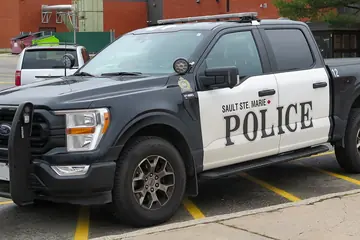
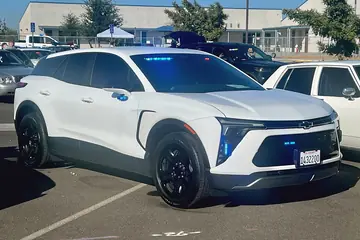
I Go Cars is an independent reference on police and government vehicles: what they are, how agencies test and retire them, where the public can acquire them once they leave service, and how the officers who drive them measure speed. Every page rests on primary documents, chiefly state police test books, federal reports, NHTSA training manuals, manufacturer specification guides and the statutes themselves.
What a police vehicle is
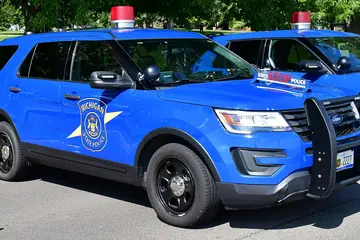
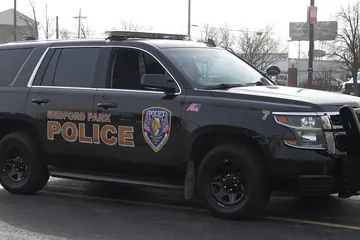
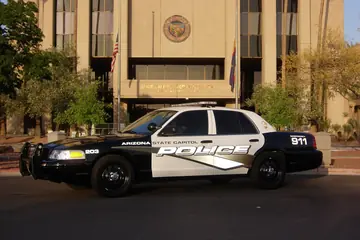
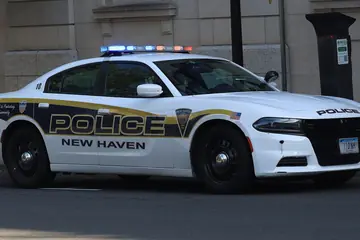
A police vehicle is not simply a civilian car with lights added. The Michigan State Police (MSP), which has tested patrol vehicles since the 1950s, describes every police-package vehicle as one that "has been modified from a civilian vehicle to perform better under the rigors of police use." Those modifications can reach the engine, the cooling system, the transmission and its shift points, the brakes, the tires and the stability-control programming. Ford, Chevrolet and Dodge each use their own names for the result. "Police Interceptor" is a Ford trademark; Chevrolet uses PPV (Police Pursuit Vehicle); Dodge uses Pursuit.
Two terms recur on every vehicle page. Pursuit-rated means the manufacturer has designated the vehicle for high-speed police driving. A special service vehicle (SSV) is a police-specific configuration intended for non-pursuit duties such as command, transport and towing. MSP is blunt about the first term: there is "no sanctioning body, or specific performance criteria," behind it, and passing MSP's own tests "does not certify a vehicle as being pursuit rated." The vehicle profiles treat the label accordingly, as a manufacturer designation rather than an independent certification.
How police vehicles are tested
Two agencies publish the test results that most fleet buyers rely on. The Michigan State Police program runs every submitted vehicle through acceleration and top-speed runs on a banked oval, 20 full stops from 60 mph, 32 timed laps of a 2-mile road course, and ergonomic and communications scoring by working officers. The Los Angeles County Sheriff's Department program, which began in 1974, adds an urban street course and a heat evaluation and measures fuel use in real driving. Both test vehicles without emergency equipment, both say their reports are not endorsements, and both leave the choice to each agency.
How vehicles move from service to sale
Agencies retire patrol vehicles on schedules they set themselves, and the schedules differ widely. Newport Beach, California replaces patrol units at 75,000 miles or four years; Washington State Patrol averaged about 118,000 miles at replacement in 2018 and 2019, while state auditors put its lowest-cost point between 130,000 and 175,000 miles. Odometer readings also understate use. Police vehicles idle for long periods to power lights, radios and computers, which is why GM and Ford build engine idle-hour meters into their police models. A retired unit can therefore show modest mileage and still carry years of hard running.
Where retired, surplus and seized vehicles are sold
The phrase "police auction" covers four legally distinct streams that often appear in the same sale. The first is retired fleet vehicles, sold as surplus by a city, county or state. The second is impounded or abandoned private vehicles that owners never reclaimed after a tow. The third is seized and forfeited vehicles, which reach the public only after a forfeiture process. The fourth is found or unclaimed property. Each stream has a different seller, a different title document and a different level of risk for the buyer.
Federal channels are just as easy to confuse. GSA Auctions sells surplus federal property of every kind, while GSA Fleet sells end-of-lease vehicles from its own leasing fleet. Neither sells seized cars: GSA Fleet states that the U.S. Marshals Service and the Treasury handle those, and the IRS runs its own sales of property taken for unpaid taxes. Across all of these channels, vehicles are generally sold "as is," and the Federal Trade Commission has called advertisements promising luxury cars for a few hundred dollars fraudulent.
How police measure speed
Police radar works on the Doppler principle (the change in frequency of a signal reflected from a moving object). NHTSA's operator training dates police use of radar for speed measurement to 1947 and moving-patrol radar to 1972. Lidar (light detection and ranging) works differently: it times hundreds of infrared light pulses per second and calculates speed from the change in distance, and NHTSA's manual describes it as designed for stationary operation only. Its beam is roughly 3 feet wide at 1,000 feet, against a radar beam that can be hundreds of feet wide at the same range.
Accuracy is checked by procedure rather than assumed. NHTSA's training calls for tuning-fork checks of radar (one fork for stationary use, two for moving use), often at the start and end of a shift, and treats an officer's visual estimate of speed as the first step of any enforcement action, with the device confirming it. The cosine effect, the error introduced when a beam strikes a vehicle at an angle, lowers a stationary reading rather than raising it.
The law on what drivers may carry is set state by state. The radar detector and laser jammer pages summarize each jurisdiction's statute, cite it, and ask the reader to check the current text, because statutes change and this site does not give legal advice.
How the site is organized
The site has two halves. The vehicle profiles cover 14 police vehicles, current and retired, each opening with a production-status verdict that the rest of the page justifies. The guides are grouped into three subjects: police vehicles explained, buying government vehicles, and traffic enforcement. I Go Cars is not a government website, is affiliated with no agency, manufacturer or auction platform, and sells nothing.