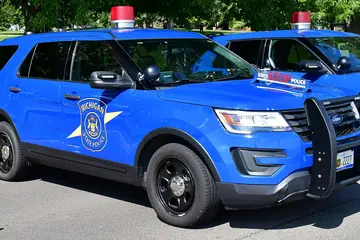
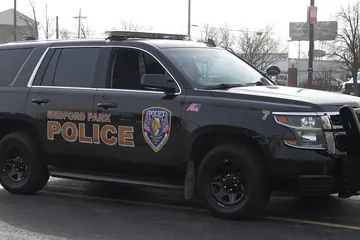
What a police auction is
A police auction is a public sale of vehicles and other property that a law enforcement agency owns or holds and is legally entitled to dispose of. The phrase covers four legally distinct streams that often appear in the same sale catalog:
- Retired fleet vehicles: patrol cars and other units the agency owns and has replaced, sold as government surplus (property an agency no longer needs).
- Impounded and abandoned vehicles: private cars towed at police direction or found abandoned, which the owner never reclaimed.
- Seized and forfeited vehicles: private vehicles taken in connection with a crime and then forfeited (transferred to the government by a court or administrative process).
- Found or unclaimed property: bicycles and goods, and occasionally a vehicle, that turned up in police custody and were never claimed.
Each stream has a different legal basis, a different seller, a different title document and a different risk for the buyer. Treating them as one thing is the most common mistake people make with police auctions, and it is the reason so many buyers arrive expecting rows of former patrol cars and find something else.
Most lots are not old police cars
The sales that carry the police name are often dominated by private vehicles. Denver's General Services surplus office runs an "Abandoned and Confiscated Vehicle" auction, and its July 1, 2026 sale listed 154 vehicles, 12 of them marked "SEIZURE" and 16 of them motorcycles, for total revenue of $185,840.00. Individual lots sold for as little as $45.00. The vehicle, seizure and motorcycle counts were tallied from the city's line-item results rather than stated by the city; only the revenue total is printed. The point stands either way: that sale mixed impounds and forfeitures, and most lots were not former police units.
Retired patrol cars usually leave through a different door, the city, county or state surplus channel, which is a separate program from the impound lot even when the same office runs both.
Stream one: retired police fleet vehicles
Agencies retire patrol units on schedules set by local policy, and those schedules vary widely. Newport Beach, California schedules police patrol and traffic vehicles for replacement at 75,000 miles or 4 years, against 120,000 miles or 12 years for its general sedans and SUVs. Washington State Patrol replaced its Ford Police Interceptor Utility pursuit vehicles at an average of 118,000 miles in 2018 and 2019, a state highway duty cycle quite different from city patrol.
The odometer understates the wear. Patrol cars idle for long periods to power radios, computers and lights. A Greenwich, Connecticut fleet policy states that an hour of idling equates to approximately 33 miles of driving, a commonly cited rule of thumb rather than a measured figure. A Hawthorne, California police equipment memo recommending replacement of five unmarked units at 93,016 to 141,627 miles noted that idle hours on the drivetrain were "even higher due to surveillance duties." A retired unit therefore offers a known owner and agency maintenance, set against heavy duty use that the mileage alone does not show.
These vehicles are typically sold through a contracted online platform under the government's own sale terms. Denver uses Dickensheet & Associates, Connecticut's Department of Administrative Services uses Property Room, and the Arizona Department of Transportation uses Public Surplus. Those names are stated here as facts about where each agency lists its vehicles, not as an assessment of any platform.
Decommissioning: why the lights and sirens are gone
A retired police car should reach the public stripped of its police identity. Texas made that a statutory requirement in House Bill 473, effective September 1, 2015 and codified at Government Code 2175.908 and Local Government Code 272.006. A state agency or political subdivision may not sell or transfer a marked patrol car or other law enforcement vehicle to the public unless it first removes "any equipment or insignia that could mislead a reasonable person to believe that the vehicle is a law enforcement motor vehicle, including any police light, siren, amber warning light, spotlight, grill light, antenna, emblem, outline of an emblem, and emergency vehicle equipment." Transfers to licensed security contractors require removal of identifying emblems and insignia. The text addresses sales to the public and to security contractors; it does not say whether the rule reaches transfers between agencies.
Manufacturers say the same in their own terms. GM's 2027 Chevrolet Tahoe 9C1 police specification guide tells agencies to "return all police vehicles to factory condition and settings upon decommissioning to prevent civilians from using these new 2027 calibrations, lighting and other features intended only for police and emergency customers," and states that "Wiring connection or splice changes are to be removed before the vehicle is returned to civilian use." The enrolled text of HB 473 is the place to read the Texas rule in full.
Streams two and three: impounds and forfeitures
Impounded and abandoned vehicles reach auction only after the owner has had a statutory chance to reclaim them. In Texas, a law enforcement agency holding an abandoned vehicle must send certified-mail notice within 10 days to the registered owner and each recorded lienholder, who then have until the 20th day after the notice to claim it. An unclaimed vehicle may be sold at public auction, with the buyer receiving a sales receipt used to obtain a title free of liens, or kept for the agency's own use. Elsewhere the sale is run by a tow and storage operator enforcing a statutory lien, as under California's lien-sale rules and Florida Statutes 713.78, or by a city department.
Forfeited vehicles follow a court timetable. Under Texas Code of Criminal Procedure article 59.06, absent a local agreement, forfeited property "shall be sold on the 75th day after the date of the final judgment of forfeiture at public auction," conducted by the county sheriff. With a local agreement, the prosecutor may instead transfer the property to law enforcement "for official purposes," and a forfeited Texas-registered vehicle is then titled to the receiving agency. At the federal level, forfeited vehicles are sold by the U.S. Marshals Service and Treasury contractors, or placed into official use or transferred to state and local agencies, so not every seizure reaches a sale.
Seizure lots can carry buyer restrictions. Denver's online sale terms mark some lots "SEIZURE" and bar anyone prohibited from purchasing a seizure vehicle, and anyone bidding on that person's behalf, from bidding on them.
The fourth stream, found and unclaimed property, is governed in Texas by a separate part of the Code of Criminal Procedure whose notice periods were not reviewed for this page, so none are stated here.
Who actually runs the sale
The police department is often not the seller of record. Four structures recur:
- An in-house city department. Long Beach, California runs in-person lien sales every other Tuesday through its Towing and Lien Sales Division, with a bidder fee for winning bidders and a key fee where keys exist.
- A county or city sheriff. Texas forfeiture sales are conducted by the county sheriff. New York City Sheriff vehicle auctions are cash-only, open to bidders 18 and older, and bar previous owners from buying back their vehicles.
- A contracted online platform under city terms. Denver General Services lists its abandoned and confiscated vehicles online through Dickensheet & Associates, with a buyer's premium and online payment.
- Private tow operators under police contract. Los Angeles has 17 Official Police Garages, private tow and storage companies regulated by the Official Police Garage Section of the Police Commission.
The structure matters because the seller's terms, not the police department's reputation, decide the fees, the payment methods and the pickup window.
What each stream means for a buyer
The stream is the first thing to establish, because the trade-offs differ sharply:
- Retired fleet units have one owner and agency maintenance, but high duty cycles and idle hours that mileage does not reveal.
- Impound lots sell for the lowest prices, as Denver's $45 lots show, but often with no inspection, no guaranteed title and no guaranteed keys. Denver allows only online photos and descriptions.
- Seizure lots can carry eligibility restrictions and unknown condition.
Removal windows are short across the board. Long Beach requires payment by 4:00 p.m. and removal by tow truck by 5:00 p.m. on sale day. Denver sets a single pickup day. A buyer without a tow arranged in advance is a poor fit for either sale. The Denver auction page is a useful example of how a city sets out these terms.
Common misconceptions about police auctions
- "Police auctions are full of old cop cars." Many are mostly impounded and abandoned private vehicles.
- "Ex-police cars come with lights and sirens." Texas law requires removal of lights, sirens, spotlights, emblems and even emblem outlines before sale, and GM tells agencies to restore factory settings and remove wiring splices.
- "Seized cars are sold right away." Texas forfeiture sales occur 75 days after final judgment, and agencies may keep forfeited vehicles for official use.
- "The police department runs the auction." Often a city surplus office, a sheriff, a tow operator or a contracted platform does, under its own terms.
Frequently asked questions
What are police auction cars?
Police auction cars are a mix of retired police fleet vehicles, unclaimed impounded or abandoned private vehicles, and forfeited vehicles. Each reaches the sale through a different legal process with different paperwork. In Texas, for example, impounds follow Transportation Code chapter 683 and forfeitures follow Code of Criminal Procedure article 59.06. Many police-related sales are mostly impounds, not former patrol cars.
Do police auction cars still have police equipment?
They should not. Texas law requires agencies to remove lights, sirens, spotlights, grill lights, antennas, emblems and even emblem outlines before selling a patrol car to the public. GM's 2027 Tahoe police guide tells agencies to return vehicles to factory condition and settings and to remove wiring splices before civilian use.
Who holds police auctions?
City surplus departments, county and city sheriffs, contracted online auction platforms and, for impounds, police-contracted tow garages hold them. Long Beach runs its own in-person lien sales, Texas sheriffs conduct forfeiture sales, Denver lists vehicles through a contracted online platform, and Los Angeles uses 17 private Official Police Garages regulated by the Police Commission.
Can anyone buy at a police auction?
Generally, any adult 18 or older with identification can buy, but there are exceptions. Denver bars persons prohibited from buying a seizure vehicle from bidding on lots marked "SEIZURE," and New York City's Sheriff auctions bar previous owners from buying back their own vehicles. Each sale's terms set its own eligibility, payment and removal rules.
How old are retired police cars when they are sold?
It depends on the agency's replacement policy. Newport Beach, California replaces patrol and traffic vehicles at 75,000 miles or 4 years, while Washington State Patrol averaged 118,000 miles at replacement in 2018 and 2019. Idle time adds wear the odometer does not show; one fleet rule of thumb equates an hour of idling to about 33 miles.
Are police auction cars cheap?
Some are, but low prices track unknown condition. At Denver's July 1, 2026 abandoned and confiscated vehicle sale, lots sold for as little as $45, and 154 vehicles brought $185,840 in total. Those were mostly impounds sold without inspection, guaranteed keys or a guaranteed title, and buyers needed a tow on a single pickup day.
Sources
- Texas Legislature — H.B. No. 473, 84th Legislature (enrolled)
- City of Newport Beach, CA — City Vehicle/Equipment Replacement Guidelines (Council Policy F-9)
- City and County of Denver, General Services Surplus — Auction Sales Data, July 1, 2026 (sd-07012026)
- Washington State JLARC — Washington State Patrol Pursuit Vehicle Replacement (Report 20-05)
- texas.public.law/statutes/tex._transp._code_section_683.012
- texas.public.law/statutes/tex._code_of_crim._proc._article_59.06
- gmfleet.com/content/dam/gmfleet/na/us/en/index/fleet/police/pdf/updated/2027…
- denvergov.org/Government/Agencies-Departments-Offices/Agencies-Departments-O…
- longbeach.gov/finance/services-and-permits/towing-and-lien-sales/auction/
- nyc.gov/assets/finance/downloads/pdf/faq/sheriff_vehicle_auctions_faq.pdf