What the Police Interceptor Utility is, and its production status
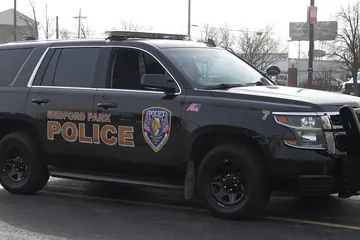
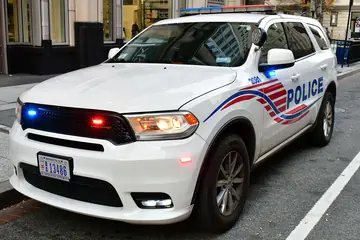
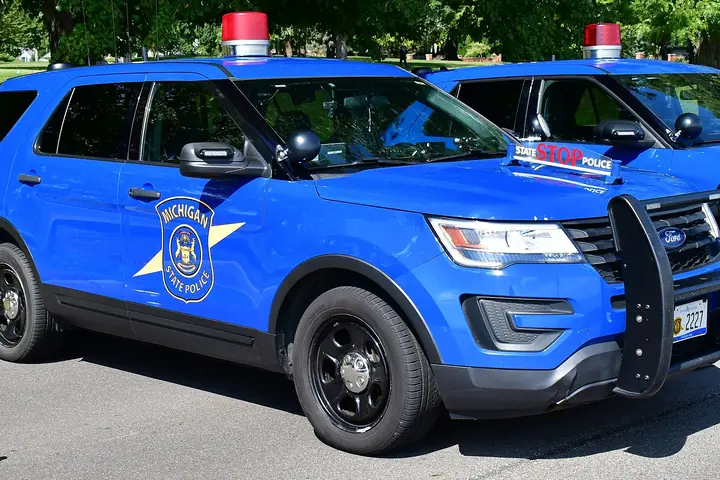
The Ford Police Interceptor Utility, usually shortened to PIU, is the police version of the Ford Explorer sport utility vehicle, engineered and sold by Ford for law enforcement use. It is pursuit-rated, meaning Ford designates it for high-speed police driving; as Michigan State Police (MSP) points out, no outside body defines or awards that term, so it is a manufacturer designation rather than a certification.
The verdict on this page is in production for police. Ford's police vehicle lineup lists the PIU, the 2025 model brought a mid-cycle update with new standard equipment, and Ford builds it at Chicago Assembly. MSP tested three PIU powertrains for model year 2026 in September 2025, and the PIU appears again in MSP's preliminary model year 2027 results.
Ford launched the PIU together with the Taurus-based Police Interceptor Sedan, and both went on sale in 2012 as successors to the Crown Victoria Police Interceptor. The sedan ended in 2019. The Utility, in Ford's words, went on to "assume the crown as America's best-selling police vehicle."
How the PIU differs from a retail Explorer
The PIU shares the Explorer's body and platform, but treating it as an Explorer with a lightbar misses the important differences. The second-generation PIU offers a 3.3L non-hybrid V6 that Wikipedia says was not offered on the retail Explorer, and all three of its powertrains are paired with all-wheel drive and a 10-speed automatic. Ford also says the PIU is designed and tested to its 75-mph rear-impact crash test goals.
The 2025 update made a long list of features standard, according to Ford Pro:
- Automatic Emergency Braking, blind-spot monitoring (BLIS) with cross-traffic alert and rear parking sensors.
- Reverse Brake Assist and rear cross-traffic braking.
- A 12.3-inch digital instrument cluster with a certified speedometer (calibrated for accuracy in speed enforcement).
- Police Perimeter Alert and Police Engine Idle, two police-only features.
Police vehicles also carry an upfit (the lights, partition, consoles, radios and wiring an agency adds after delivery). That upfit is often worth more than the vehicle: Seattle's city auditor found the department paid about $86,836 for each 2020 PIU, of which about $38,482 (44%) was the base vehicle and about $48,354 (56%) was upfitting and additional options. Those are one agency's 2020 figures, not current prices.
Engines and generations
First generation (model years 2013-2019)
Wikipedia dates the first-generation PIU to model year 2013 on the Explorer platform. MSP's model year 2018 test book describes two all-wheel-drive powertrains, both with a six-speed automatic, an 18.6-gallon tank and an EPA rating of 15 mpg city and 20 highway:
- 3.7L V6: 304 hp at 6,250 rpm and 279 lb-ft.
- 3.5L EcoBoost (twin-turbocharged) V6: 365 hp at 5,500 rpm and 350 lb-ft from 1,500 to 5,250 rpm. Wikipedia says this engine was added for model year 2014.
Second generation (model year 2020 on)
Ford announced the second generation in January 2019, based on the sixth-generation Explorer, with "standard full-time Intelligent All-Wheel Drive," a 10-speed automatic and a standard 3.3L hybrid that Ford billed as "the first pursuit-rated hybrid police utility." Ford Pro lists the 2025 outputs as follows:
- 3.3L hybrid (standard): 318 hp and 322 lb-ft.
- 3.3L V6 gasoline: 285 hp and 260 lb-ft.
- 3.0L EcoBoost V6: 400 hp and 415 lb-ft.
MSP's model year 2026 specifications show the trade-offs among them: curb weight of 4,755 lb for the 3.3L, 4,848 lb for the EcoBoost and 5,303 lb for the hybrid; a 21.4-gallon tank on the gasoline models and 19.0 gallons on the hybrid; 52.0 cubic feet of cargo space and a 1,670-lb payload; and EPA combined ratings of 19 mpg (3.3L), 20 mpg (EcoBoost) and 23 mpg (hybrid).
Performance: Michigan State Police and LASD testing
MSP figures are clean-roof test results, taken without lightbars, spotlights or antennas; MSP notes that performance with emergency equipment installed may be lower. In model year 2026 testing (September 2025), the three PIUs recorded:
- 3.0L EcoBoost AWD: 0-60 mph in 5.95 seconds, 0-100 mph in 13.87 seconds, 148 mph top speed.
- 3.3L Hybrid AWD: 7.52 seconds, 17.52 seconds, 136 mph.
- 3.3L AWD: 8.19 seconds, 19.36 seconds, 136 mph.
The EcoBoost's 148 mph was the highest top speed of the 13 vehicles MSP tested that year. All three versions clear MSP's purchasing criteria of 9.0 seconds to 60 mph and 24.6 seconds to 100 mph. On MSP's vehicle dynamics course at Grattan Raceway, the EcoBoost averaged 1:35.95 per lap, the 3.3L 1:38.95 and the hybrid 1:39.42; the Chevrolet Tahoe PPV RWD, for comparison, averaged 1:38.09. MSP's preliminary model year 2027 results show the EcoBoost at 6.26 seconds and 148 mph, figures MSP says will update as testing data are entered.
Earlier books show how the PIU developed. In model year 2018 (the final first-generation years), the 3.5L EcoBoost ran 6.30 seconds and 132 mph and the 3.7L ran 7.81 seconds and 133 mph; MSP noted the EcoBoost was tested with the optional power transfer unit cooler. In model year 2019, MSP's first test of the second generation, the hybrid ran 7.27 seconds and 137 mph, the 3.0L EcoBoost 5.77 seconds and 150 mph, and the 3.3L 7.84 seconds and 137 mph. Ford's launch material cited the hybrid's 137 mph; the 2026 book shows 136 mph. Cite each figure with its model year.
The Los Angeles County Sheriff's Department (LASD), which has tested police vehicles since 1974, gives a second view. Its model year 2023 booklet recorded 0-60 mph in 8.33 seconds for the 3.3L, 6.50 seconds for the EcoBoost and 7.81 seconds for the hybrid, with tested fuel economy of 18 mpg for the 3.3L, 15.7 mpg for the EcoBoost and 20 mpg for the hybrid. LASD notes some of those fuel figures were carried over from 2021 testing. The full current data are in the MSP 2026 Model Year Police Vehicle Evaluation test book.
How agencies use it, and the hybrid fuel claims
The PIU won the fleet as police buying shifted from sedans to SUVs. Ford said that by 2017 the Utility accounted for 80% of its Police Interceptor sales, that Ford held 65% of U.S. police vehicle sales that year, and that the 2017 PIU alone was more than half of all U.S. police vehicle sales. For 2023, Ford calls the PIU America's best-selling police vehicle based on S&P Global Mobility registration data for government buyers, without giving unit counts. No independent market-share figure for recent years was found, so these remain Ford's claims.
Public audits show the PIU's place in individual fleets. Washington State Patrol's PIU made up over 70% of its pursuit fleet, according to the state's Joint Legislative Audit and Review Committee (JLARC). Seattle's police patrol fleet held 272 PIUs at year-end 2020, after the department selected the PIU in 2013 to replace its Crown Victorias.
The hybrid's appeal rests on fuel savings, and Ford's two published estimates use different baselines:
- 2019: $3,500 to $5,700 per vehicle per year versus the 3.7L PIU, computed with fuel at $2.75 to $4.50 per gallon. A Ford-sponsored Government Fleet article attributed about 343 gallons a year to driving 20,000 miles and about 933 gallons to idling, for up to 1,276 gallons.
- 2024: up to 838 gallons a year and about $17,500 over a six-year term at $3.50 per gallon.
The structure of the 2019 estimate is the point most readers miss: nearly three-quarters of the projected saving comes from idling. An agency whose cars idle little will see much less. LASD's tested 20 mpg for the hybrid is also below both the 24 mpg combined Ford projected in 2019 and the 23 mpg EPA combined figure in MSP's 2026 book.
The carbon monoxide investigation
The PIU's most serious public issue was exhaust odor and carbon monoxide (CO) in the cabin. NHTSA opened a probe in 2016 covering 638,000 vehicles and on July 27, 2017 upgraded it to engineering analysis EA17-002, covering about 1.33 million 2011-2017 Explorers. NHTSA cited more than 2,700 complaints, three crashes and 41 injuries at that time, and Austin police pulled about 40 Explorers from service.
Ford said in August 2017 that the police-vehicle problems came from "improperly sealed holes in the body of the vehicles" made during upfitting, and that it would cover repairs regardless of the vehicle's age, mileage or who was responsible for the leaks. Ford also stated that there had been no reports of CO issues with consumer Explorers. In October 2017 it announced a complimentary service program for about 1.3 million U.S. retail 2011-2017 Explorers, covering air-conditioning reprogramming, liftgate drain valve replacement and a rear sealing inspection.
NHTSA closed EA17-002 on Jan. 17, 2023 without a recall. It found that "sealing issues caused by upfitting were responsible for the highest measured carbon monoxide levels in tested vehicles," that properly repaired vehicles stayed below EPA ambient standards, and that it had "not identified a defect that represents an unreasonable risk to motor vehicle safety." The related field actions were 17B25 for police vehicles and 17N03 for consumer vehicles. The NHTSA opening resume for EA17-002 documents the scope of the original investigation.
Buying a retired PIU: what to check
Retired PIUs reach the public through agency surplus sales, and the audits above describe the kind of vehicle that results. Washington State Patrol replaced its PIUs at an average of 118,000 miles in 2018 and 2019, and JLARC found they retained on average 71.74% of their value each year of operation. Seattle keeps gasoline PIUs five years and hybrids seven. A surplus PIU is therefore commonly a high-mileage vehicle, and the hybrid in particular may carry many years of service.
- Idle hours: police vehicles idle for long periods, which wears the drivetrain without adding miles. One town fleet policy equates an hour of idling to roughly 33 miles of driving, an approximation. A Hawthorne, California memo noted that idle hours on unmarked units were "even higher due to surveillance duties."
- Upfit sealing and exhaust odor: ex-police units are the group NHTSA found most affected, because of unsealed holes from equipment installation. Ask whether Ford's police field action 17B25 was completed; a Ford dealer can be asked to check the vehicle's service history by VIN.
- Removed equipment: holes left after the lightbar, partition and consoles come out should be sealed for the same reason. Some states also regulate decommissioning; Texas, for example, requires lights, sirens, spotlights and emblems to be removed before a state agency sells a marked patrol car.
- Powertrain: confirm which engine the vehicle has. The hybrid is 548 lb heavier than the 3.3L gas model and has a smaller tank; the EcoBoost is the quickest but is rated 20 mpg combined against the hybrid's 23.
Frequently asked questions
What engines does the Ford Police Interceptor Utility have?
The current PIU offers a standard 3.3L hybrid (318 hp), a 3.3L V6 (285 hp) and a 3.0L EcoBoost V6 (400 hp), all with all-wheel drive and a 10-speed automatic. The first generation, sold for model years 2013 to 2019, used a 3.7L V6 (304 hp) or a 3.5L EcoBoost V6 (365 hp) with a six-speed automatic.
How fast is the Ford Police Interceptor Utility?
In Michigan State Police model year 2026 testing, the 3.0L EcoBoost PIU reached 60 mph in 5.95 seconds and a 148 mph top speed, the highest of the 13 vehicles tested. The hybrid ran 7.52 seconds and 136 mph. These are clean-roof results without lightbars or equipment, so an equipped vehicle may be slower.
Is the Ford Police Interceptor Utility an Explorer?
Yes, the PIU is based on the Ford Explorer, but it is a distinct police model. The second generation offers a 3.3L non-hybrid V6 not sold on the retail Explorer, comes only with all-wheel drive, carries police-specific features such as Police Engine Idle, and is designed to Ford's 75-mph rear-impact crash test goals.
What years is the Ford Police Interceptor Utility?
The first generation covers model years 2013 to 2019, and the second generation began with model year 2020. Ford says the PIU went on sale in 2012, and the second generation received a mid-cycle update for 2025 that added standard Automatic Emergency Braking and a certified digital speedometer.
Do police Explorers have a carbon monoxide problem?
NHTSA closed its carbon monoxide investigation in 2023 without a recall, finding no defect that posed an unreasonable safety risk. The highest CO levels it measured came from improperly sealed holes made during police upfitting. Ford covered police repairs under field service action 17B25, which used-vehicle buyers should ask about.
How much fuel does the hybrid Police Interceptor Utility save?
Ford claimed in 2019 that the hybrid saved $3,500 to $5,700 per vehicle per year versus the 3.7L, with fuel at $2.75 to $4.50 a gallon, and in 2024 up to 838 gallons a year. Most of the 2019 estimate came from idling, and LASD measured 20 mpg for the hybrid in testing.
What should I check on a used Police Interceptor Utility?
Check mileage, idle hours and upfit sealing first. Washington State Patrol retired its PIUs at an average of 118,000 miles, and idling adds engine wear the odometer does not show. Because unsealed equipment holes caused the highest carbon monoxide readings, confirm whether Ford's police field action 17B25 was completed.
Sources
- Michigan State Police, Precision Driving Unit — 2026 Model Year Police Vehicle Evaluation Program
- Los Angeles County Sheriff's Department — 48th Annual Law Enforcement Vehicle Test and Evaluation Program, Vehicle Model Year 2023
- Seattle Office of City Auditor — Audit of Seattle Police Department Patrol Vehicle Procurement
- Washington State JLARC — Washington State Patrol Pursuit Vehicle Replacement (Report 20-05)
- static.nhtsa.gov/odi/inv/2017/INOA-EA17002-5925.PDF
- ojp.gov/pdffiles1/nij/nlectc/252819.pdf
- fromtheroad.ford.com/us/en/articles/2024/ford-pro-launches-2025-ford-police-…
- media.ford.com/content/fordmedia/fna/us/en/news/2017/10/ford-announces-compl…