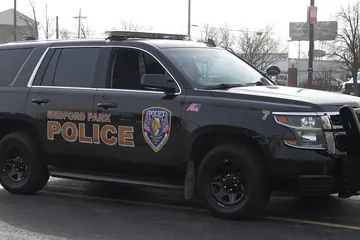
What decommissioning is, and why the paperwork varies
Decommissioning is the process by which a law enforcement agency removes the equipment, markings, wiring and police-only settings from a vehicle before it leaves service and is sold or transferred. The title side of the same transaction is the ownership document the buyer receives, and that document depends entirely on which channel sold the vehicle: a federal sale, a state or city surplus sale, an impound sale or a forfeiture sale.
The two subjects belong together because both determine whether a retired police car can be legally registered and driven as an ordinary vehicle. A car that is properly stripped but sold with paperwork the buyer's state will not accept is a problem. So is a car with clean paperwork that still carries a light bar, a siren or a scheme of markings the law forbids a civilian to keep.
This page describes what the statutes and sale terms say. It is not legal advice, and statutes change; the current text of any law cited here should be checked before relying on it.
What must come off: the Texas rule
Texas has the clearest statute found on decommissioning before sale. House Bill 473, effective September 1, 2015, provides that a state agency or local government may not sell or transfer a marked patrol car or other law enforcement motor vehicle to the public unless it first removes “any equipment or insignia that could mislead a reasonable person to believe that the vehicle is a law enforcement motor vehicle, including any police light, siren, amber warning light, spotlight, grill light, antenna, emblem, outline of an emblem, and emergency vehicle equipment.”
The rule is codified at Government Code 2175.908 for state agencies and Local Government Code 272.006 for counties, cities, school and junior college districts and special districts, and Government Code 2175.304(f) extends it to higher education. Transfers to security services contractors licensed by the Texas Department of Public Safety require removal of each identifying emblem or insignia. Whether HB 473 has been amended since 2015 was not checked for this page.
The phrase “outline of an emblem” matters. A decal leaves a ghost outline in faded paint, and Texas treats that shadow as something to be removed, not just the decal itself. A search for a comparable statute in a third state requiring decommissioning before sale found none; the Florida and California laws discussed below govern owning and operating a vehicle, not the agency's sale.
What the manufacturer asks agencies to do
Manufacturer guidance goes beyond equipment removal. GM's 2027 Tahoe 9C1 PPV Specification Guide asks agencies to “return all police vehicles to factory condition and settings upon decommissioning to prevent civilians from using these new 2027 calibrations, lighting and other features intended only for police and emergency customers.” It adds that “wiring connection or splice changes are to be removed before the vehicle is returned to civilian use.” For vehicles ordered with certain factory pillar-light options, GM ships the original exterior D-pillar trim loose “for vehicle decommissioning,” so that the civilian trim can be refitted when the lights come out.
The guidance follows from GM's sales policy. GM's police specification guides state that GM “restricts the sale of police vehicles” and that they “are not to be sold to retail customers.” A police calibration or lighting feature is never meant to reach a civilian through the dealer channel, and decommissioning is the step intended to stop it reaching one through retirement. The guidance is a manufacturer instruction to its customers, not a statute, and a buyer cannot assume any agency followed it in full.
Title documents by sale channel
Federal sales: the SF 97
A vehicle sold by GSA Fleet or through GSA Auctions comes with a Standard Form 97, the U.S. Government Certificate to Obtain Title, plus a Purchaser's Receipt. GSA Fleet's terms use the current form number SF 97-1; Standard Form 114C and other GSA pages say SF 97, and both labels appear in current documents. The GSA Fleet Internet Terms state that “the SF-97-1 is not a motor vehicle registration.” It is evidence of title used to obtain a state title, accepted in all 50 states and U.S. territories.
The bidder, meaning the person or company registered on the sale account, matters here. The GSA Fleet Digital Live Sale Terms, the rules for GSA Fleet's contracted live and digital auctions (version dated March 1, 2026), and the Internet terms both issue the SF 97-1 only to the registered bidder. Duplicates require a written request and may carry a fee. On GSA Auctions, a buyer who wants the SF 97 in a business name must register as a company, and no change is permitted after award. Under Standard Form 114C, title vests in the purchaser when the vehicle is removed. A 2025 New York Assembly bill, A.9397, describes the SF 97 as routinely accompanying federal surplus vehicles bought through GSA Auctions; it is an introduced bill, not law, and is cited only for that description.
State and local surplus sales
A state or city surplus office usually issues the state title itself after payment. The Arizona Department of Transportation issues “a title or certificate” that may carry restrictions noted in the listing, and issues no open titles and no replacement titles. North Carolina issues titles only to the person named on the bid, exactly matching that person's driver's license.
Impound, forfeiture and tax sales
- Texas impound sales: the purchaser receives a sales receipt from the law enforcement agency, takes title free and clear of liens, and uses the receipt to apply for a certificate of title (Transportation Code 683.014).
- California lien sales: the buyer receives a REG 168 or REG 168A Certification of Lien Sale and registers with a REG 343.
- Denver city auctions: the city issues a Bill of Sale and three supporting documents that meet Colorado requirements only, and title is “not guaranteed.”
- IRS seizure sales: “We do not issue titles, as that is a state function”; the buyer receives a Certificate of Sale and an odometer statement.
- Texas forfeitures kept by police: when a forfeited vehicle is transferred to a law enforcement agency, “the certificate of title shall issue to the agency,” so a later surplus sale is by the agency as owner.
The contrast matters most to out-of-state buyers. GSA states the SF 97-1 is accepted in every state; Denver states its documents meet Colorado's requirements and that out-of-state requirements are unknown.
Salvage, parts-only lots and title brands
Some government vehicles are sold only for parts, and their paperwork says so permanently. GSA Fleet gives junk, salvage and flood-damaged vehicles a branded SF 97-1, for example “salvage - parts only,” and no later SF 97-1 is issued even after the vehicle is repaired. Denver's “Junk/For Parts Only” vehicles receive no Colorado title or salvage receipt, and its “Salvage” and “Rebuilt from Salvage” designations are posted and must be acknowledged by the buyer.
Prior police use is a different matter. No state was found that brands a title to show former police service, and that question was not verified either way. A retired patrol car sold with a clean SF 97 or state title is, on paper, an ordinary vehicle.
Keeping the police look: markings and paint
A decommissioned car can still resemble a police car, and two states show how the law treats that. Florida Statutes 843.085(2) makes it unlawful to “own or operate a motor vehicle marked or identified in any manner” with words such as “police” or “sheriff” or official-style stars, badges or shields “with the intent to mislead or cause another person to believe” it is an official vehicle. Agency-owned and authorized vehicles are excepted, and a violation is a first-degree misdemeanor. The full text is on the Florida Legislature's statutes site.
California goes further and regulates the paint itself. Vehicle Code 27605 provides that “no person shall own or operate a motor vehicle painted in the manner described in Section 40800,” the distinctive color specified by the California Highway Patrol commissioner for traffic officers on duty. Exceptions include vehicles painted one solid color, vehicles first registered on or before January 1, 1979, manufacturer- and dealer-owned vehicles, law enforcement vehicles, movie and television cars displaying a “movie car” sign, funeral escorts, motorcycles without insignia, and museum vehicles under conditions. A buyer restoring a retired unit for display should check those exceptions before repainting.
Lights and sirens on a civilian vehicle
Equipment an agency fails to remove does not become legal to use. In Texas, Transportation Code 547.305 states that “a person may not operate a motor vehicle equipped with a red, white, or blue beacon, flashing, or alternating light” unless authorized, with normal running and turn lamps excepted. Alternating flashing equipment is limited to school buses, authorized emergency vehicles, marked church buses and certain tow trucks, and security patrol vehicles “may only be equipped with green, amber, or white lights.”
Texas Transportation Code 547.501 adds that “a vehicle may not be equipped with and a person may not use on a vehicle a siren, whistle, or bell,” with two exceptions: a commercial vehicle theft alarm (an alarm that sounds when someone tampers with the vehicle), which may not be used as a warning signal, and an authorized emergency vehicle with a compliant device. Under 547.702, an authorized emergency vehicle's siren must be a DPS-approved type audible at 500 feet.
California's rules run parallel. Vehicle Code 25250 states that “flashing lights are prohibited on vehicles except as otherwise permitted.” Vehicle Code 27002 provides that “no vehicle, except an authorized emergency vehicle, shall be equipped with” a siren, and Vehicle Code 25252 requires authorized emergency vehicles to display a steady red warning lamp visible 1,000 feet ahead.
Common misconceptions
- “The SF 97 is the title.” It is a certificate used to obtain a state title, and GSA states it is not a registration.
- “A salvage-branded government vehicle can be retitled clean after repair.” GSA does not reissue a branded SF 97-1 after repairs.
- “If the agency left the light bar on, I can use it.” Texas and California restrict flashing and colored lights and sirens to authorized vehicles, whatever the vehicle's history.
- “Removing the decals is enough.” Texas law also covers the outline of an emblem, spotlights, antennas and grill lights.
- “Keeping the police look is harmless.” Florida criminalizes owning or operating a police-marked vehicle with intent to mislead, and California bars the traffic-officer paint scheme outside its listed exceptions.
Frequently asked questions
What title do you get with a GSA auction police car?
You get a Standard Form 97, the U.S. Government Certificate to Obtain Title (SF 97-1 in GSA Fleet's terms), plus a Purchaser's Receipt. It is not itself a title or a registration. You take it to your state motor vehicle agency to obtain a state title, and GSA states it is accepted in all 50 states and U.S. territories.
Do police cars have to be stripped before sale?
In Texas, yes. HB 473 bars state agencies and local governments from selling a marked patrol car to the public until police lights, sirens, amber warning lights, spotlights, grill lights, antennas, emblems and even the outline of an emblem are removed. GM's police guides also ask agencies to return vehicles to factory condition and settings at decommissioning.
Is it legal to own a car that looks like a police car?
It depends on the state. Florida prohibits owning or operating a vehicle marked with words such as police or sheriff, or official-style badges, with intent to mislead. California bars owning or operating a vehicle in the traffic-officer paint scheme, with exceptions such as one solid color, pre-1979 registration and signed movie cars. Check the current statute text.
Can civilians have red and blue lights or a siren?
Generally no. Texas bars operating a vehicle equipped with red, white or blue beacon or flashing lights unless authorized, and bars sirens except on authorized emergency vehicles, with a narrow exception for commercial vehicle theft alarms. California prohibits flashing lights except as permitted and allows sirens only on authorized emergency vehicles.
Can I title a salvage government vehicle after fixing it?
Not with a new SF 97-1 from GSA. Junk, salvage and flood-damaged vehicles receive a branded SF 97-1, such as salvage - parts only, and GSA does not reissue it after repairs. Denver likewise gives its Junk/For Parts Only vehicles no Colorado title or salvage receipt, so those lots cannot become clean-titled cars.
Do impound auction cars come with a title?
Usually not directly. Buyers typically receive a sales receipt, bill of sale or lien-sale certificate and apply to the state for a title: Texas issues a sales receipt, California a REG 168 or 168A, and Denver a Bill of Sale with title not guaranteed. The IRS gives a Certificate of Sale. Parts-only vehicles may not be titleable at all.
Does a title show that a car was a police vehicle?
No state was found that brands a title for prior police use, though that was not verified either way. Title brands that do appear on government vehicles relate to condition, such as GSA's salvage - parts only SF 97-1 or Denver's Salvage and Rebuilt from Salvage designations. Prior service is usually evident from the vehicle and its agency records instead.
Sources
- Texas Legislature — H.B. No. 473, 84th Legislature (enrolled)
- marketplace.gsafleet.gov/assets/pdf/GSA_Fleet_Internet_Terms_and_Conditions_…
- asset.gsafleet.gov/mp/assets/GSA_Fleet_Digital_Live_Sale_Terms_and_Condition…
- gsa.gov/cdnstatic/SF_114C.pdf
- gmfleet.com/content/dam/gmfleet/na/us/en/index/fleet/police/pdf/updated/2027…
- leg.state.fl.us/statutes/index.cfm?App_mode=Display_Statute&URL=0800-0899/08…
- california.public.law/codes/vehicle_code_section_27605
- texas.public.law/statutes/tex._transp._code_section_547.305
- texas.public.law/statutes/tex._transp._code_section_683.014
- irsauctions.gov/first-time-bidder