What a used police car is, and how one reaches the public
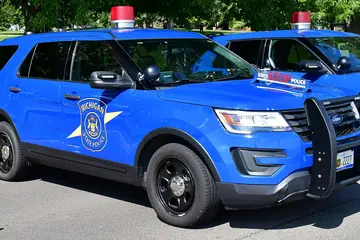
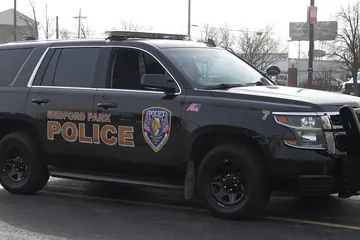
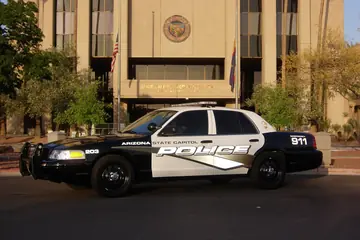
A used police car is a police-package vehicle, built by the manufacturer for law enforcement duty, that an agency has retired from its fleet and sold. Examples include Ford's Police Interceptor Utility and Chevrolet's Tahoe PPV (police pursuit vehicle, GM's designation for its pursuit-rated police package). These are not civilian models with stickers added. They have different suspensions, brakes, electrical systems and instruments, and they reach a private owner only one way.
GM's police specification guides state that GM “restricts the sale of police vehicles” and that they “are not to be sold to retail customers.” A civilian therefore cannot order a new one. The only route is after retirement, through a state or city surplus sale, a police department auction or, less often, a federal sale through GSA (the General Services Administration).
Retirement follows agency policy, not wear alone. Newport Beach, California, replaces police patrol and traffic vehicles at 75,000 miles or four years, against 120,000 miles or 12 years for general sedans. Washington State Patrol replaced its Police Interceptor Utilities at an average of 118,000 miles in 2018 and 2019. Both figures describe units that are relatively young for their mileage and have worked hard for every mile. This page is a buyer checklist: a structured list of what to verify on a retired unit, built from manufacturer police guides, agency records and sale terms.
Which models turn up most often
No auction-level data show which models are sold most often. Fleet composition is the closest proxy, because today's patrol fleet is tomorrow's surplus.
- Ford Police Interceptor Utility. Seattle Police Department's patrol fleet, built on the Crown Victoria at the end of 2012, had become 272 Police Interceptor Utilities by the end of 2020, according to the city auditor. At Washington State Patrol, the Utility accounts for over 70% of the pursuit fleet.
- Ford's market share claim. In January 2019 Ford stated that it had 65% of U.S. police vehicle sales in 2017 and that the 2017 Police Interceptor Utility was more than half of all U.S. police vehicle sales. That is a company claim, not an independent count.
- Crown Victoria Police Interceptors remain in older fleets and older surplus listings.
- Federal donation stock. Pennsylvania's fixed-price federal surplus program lists police cars among the special vehicles occasionally available, but that program sells only to eligible public entities.
Most retired units a buyer sees are therefore likely to be Ford Utilities, with Chevrolet Tahoes and Dodge Chargers and Durangos in the mix.
Idle hours: the wear the odometer does not show
Police vehicles spend long periods parked with the engine running. Ford states that police vehicles “must constantly keep their engines running to power electrical equipment.” That running time wears the engine, oil and drivetrain but adds nothing to the odometer.
How engine hour meters work
An engine hour meter records the total time the engine has run. An idle meter records the portion of that time the engine ran while the vehicle was stationary. Manufacturers fit both to police vehicles because odometer mileage alone understates use. GM's 2027 Tahoe 9C1 PPV Specification Guide lists a “Certified 140 mph speedometer, odometer with trip odometer, engine hour meter, engine idle meter,” with “Engine Idle Hours” in the driver information center menu. The Michigan State Police MY2026 test book lists an engine idle hour meter as a standard highlight of the 2026 Tahoe PPV. Ford's 2023 Police and SSV Guide describes an odometer display on the Police Interceptor Utility that shows idle-hour usage, and Ford's 2025 Utility update made a feature it calls “Police Engine Idle” standard. GM's “Protected Idle” lets the engine keep running while the vehicle stays immobilized with the key fob outside, which is exactly the kind of use the meter is there to capture.
Converting idle hours to miles
The Town of Greenwich, Connecticut, states in its fleet anti-idle policy that an idling engine may use as much as one gallon of fuel per hour and that one hour of idling “equates to approximately 33 miles of driving.” That is a widely repeated rule of thumb, not a manufacturer specification, but it shows the scale: 1,000 idle hours would correspond to roughly 33,000 miles of engine wear on that basis.
What is not published
No national average of idle hours at sale is published. No agency, manufacturer or auction source reviewed for this page reports what a typical retired unit shows on its idle meter. The figures that do exist are inputs and anecdotes. A Santa Barbara County cost study assumed 3.00 idle hours per patrol shift, a calculator input rather than a measured average. A January 2025 Hawthorne, California, police memo proposed replacing five unmarked units at 93,016 to 141,627 miles and noted that the idle hours on the drivetrain were “even higher due to surveillance duties.” Unmarked surveillance units are therefore the likeliest to show a poor ratio of idle time to miles. The only reliable number is the one on the vehicle's own meter, which is why reading it, where the sale allows the engine to be started, matters more than the odometer.
Upfit holes, wiring and removed equipment
Every police vehicle is upfitted after delivery, meaning the agency or a contractor adds the lights, partition, consoles, radios and wiring. That work leaves marks when it comes out. GM's police guide warns that “care must be taken during customer installation of equipment and wiring to ensure that all holes drilled in the body are corrosion protected, properly sealed” and that harnesses and other components “have not been displaced or damaged.”
GM goes further at retirement. It tells agencies to “return all police vehicles to factory condition and settings upon decommissioning,” and states that “wiring connection or splice changes are to be removed before the vehicle is returned to civilian use.” GM even ships the original exterior D-pillar trim loose with certain factory pillar-light options “for vehicle decommissioning.” The text is in the GM 2027 Tahoe 9C1 PPV Specification Guide. No buyer can assume a given agency followed it.
Sealing matters for more than rust. NHTSA (the National Highway Traffic Safety Administration) closed investigation EA17-002 on January 17, 2023, without a recall, finding that “sealing issues caused by upfitting were responsible for the highest measured carbon monoxide levels in tested vehicles.” Ford had attributed police carbon monoxide concerns in 2017 to “unsealed holes from the installation of police equipment by third parties,” and its police field service action was 17B25. On a used Police Interceptor Utility of that era, it is worth confirming whether 17B25 was performed and whether every hole in the cargo area and body is sealed.
State law can guarantee the holes exist. Texas requires removal of police lights, sirens, amber lights, spotlights, grill lights, antennas, emblems and the “outline of an emblem” before sale to the public, so a Texas unit should be expected to show patches and paint shadows where that equipment was.
Police-only parts and calibrations
A police package changes parts that a civilian owner will eventually have to replace. GM's 2027 guide states that Tahoe PPV content differs from the retail model: trim height is 20 mm lower, the front brakes are police-specific Brembo six-piston calipers on 410 mm rotors, and the speedometer is certified to 140 mph. GM also notes that stated speedometer accuracy depends on GM-specified maintenance, including the 35 psi tire placard, 275/55R20 tires, the original driveline ratios and “original OEM electronic module calibration files.”
Two consequences follow. First, heavy-duty brakes and police tire sizes are durability features, but they come with police-specific parts costs. Second, the calibrations in a retired unit may not be what the factory intended for civilian use. GM's instruction to restore factory settings at decommissioning exists because police calibrations, lighting and features are “intended only for police and emergency customers.” A buyer should not assume those settings were restored, or that they were left in place.
Recalls and maintenance records
Police models carry police-specific recalls that a civilian history check may not highlight. The Dodge Charger Pursuit alone has several: 18V-281 for the front propshaft U-joint on 2015–2018 AWD Pursuit V8 models, 20V-512 for a stealth mode that disabled the rear camera on 2018–2020 Pursuits, and 22V-866 for the shifter on 2022 Chargers and Durangos with the Police Group. GSA Fleet's sale terms say open recalls are identified in listings “but others may exist,” and direct buyers to check with NHTSA or a dealer. A VIN check covers every vehicle, whatever the listing says.
Maintenance history is the one advantage a fleet vehicle has over a repossessed or impounded car, and it is often obtainable. Agency records are generally public information; the Texas Public Information Act, for example, makes public information available “at a minimum during the normal business hours of the governmental body.” A records request naming the unit number or VIN can produce the maintenance and repair file. Published agency documents show such records exist; Hawthorne's replacement memo lists unit numbers, models and mileage. The specific exceptions that might withhold vehicle records were not reviewed for this page.
Inspection limits, sale terms, title and paint
- Inspection is often limited or absent. Denver's abandoned and confiscated vehicle auction states “Inspection: NONE. Limited to online pictures and descriptions only.” North Carolina surplus vehicles “cannot be moved,” only started, and “may not pass a state inspection.”
- Sales are as-is. Federal sales under Standard Form 114C are “as is” and “where is”; North Carolina sells with “All Faults”; Arizona's transportation department gives no refunds.
- Title follows the bidder. North Carolina issues the title only in the exact name on the bid, matching the driver's license, and issues no temporary plates.
- Federal units come with an SF 97. GSA provides a Standard Form 97, a certificate used to obtain a state title; GSA's terms state it “is not a motor vehicle registration.”
- Some city sales are tow-away only. Denver sells vehicles as tow-aways with no emissions test or temporary permit.
- Paint can be regulated. California Vehicle Code 27605 bars owning or operating a vehicle painted in the traffic-officer color scheme described in Section 40800, with exceptions such as a single solid color, vehicles first registered on or before January 1, 1979, and movie cars displaying a sign.
Value, and when a retired police car is a poor choice
Retired police cars are not deeply discounted. Washington's legislative auditors found that State Patrol Police Interceptors retained an average of 71.74% of their value each year of operation, based on the agency's own surplus sales. Vermont's state surplus vehicles, a general fleet, sold for an average of 76% of retail book value in 2019 and 2020. A buyer competes with dealers and other buyers at roughly market value, for a vehicle with heavy duty hours and limited inspection.
A retired police car is a poor choice for a buyer who needs a warranty, financing or a test drive; GSA offers no financing, and sales are as-is across every channel. It is a particularly poor choice when the unit is an unmarked surveillance car with high idle hours, when the cargo area shows unsealed holes, or when the buyer cannot afford police-specific brakes and tires. It suits a buyer who reads the idle meter, requests the maintenance file, runs the VIN for recalls and budgets for upfit repairs before deciding.
Frequently asked questions
Is it worth buying a used police car?
It can be, but only priced as what it is: a hard-used vehicle sold as-is at close to market value. Retired units often carry high idle hours, upfit holes and police-specific parts. Vermont's surplus vehicles averaged 76% of retail book value, and Washington State Patrol Interceptors retained 71.74% of their value per year, so the discount is modest.
How do I check idle hours on a police car?
Read the engine hour and idle meters in the instrument cluster, if the sale allows the engine to be started. GM lists an engine hour meter and engine idle meter on the police Tahoe, with Engine Idle Hours in the driver information center, and Ford describes an idle-hour display on the Police Interceptor Utility. Compare idle hours with total hours and miles.
How many miles does an idle hour equal?
About 33 miles, by a common rule of thumb. The Town of Greenwich, Connecticut, states in its fleet anti-idle policy that one hour of idling equates to approximately 33 miles of driving and may burn up to a gallon of fuel. It is an approximation, not a manufacturer specification, and no national average of idle hours at sale is published.
Can I get the maintenance records for a retired police car?
Often, yes, through a public records request. Agency records are generally public information under laws such as the Texas Public Information Act, so a request to the selling agency naming the unit number or VIN can produce the maintenance and repair file. Exceptions vary by state and were not reviewed here.
What should I check on a used police Explorer?
Check idle hours, the sealing of every upfit hole, and whether Ford field service action 17B25 was performed. NHTSA's investigation EA17-002, closed in January 2023 without a recall, found that sealing issues caused by upfitting were responsible for the highest measured carbon monoxide levels in tested Police Interceptor Utilities. Run the VIN for open recalls as well.
What are the most common used police cars?
Fleet data point to the Ford Police Interceptor Utility. Seattle's patrol fleet had 272 of them at the end of 2020, and the Utility makes up over 70% of Washington State Patrol's pursuit fleet. Crown Victorias remain in older fleets, and Chevrolet Tahoes and Dodge Chargers and Durangos also appear. No auction-level count exists.
Can I buy a new police car as a civilian?
No. GM's police specification guides state that GM restricts the sale of police vehicles and that they are not to be sold to retail customers. A civilian can own a police-package vehicle only after an agency retires it and sells it through a surplus sale, a police auction or a federal GSA sale.
Can I keep the police paint scheme?
It depends on the state. California Vehicle Code 27605 prohibits owning or operating a vehicle painted in the traffic-officer color scheme, with limited exceptions such as one solid color, vehicles first registered on or before January 1, 1979, and movie cars with a sign. Texas requires agencies to remove emblems and emblem outlines before sale.
Sources
- Michigan State Police, Precision Driving Unit — 2026 Model Year Police Vehicle Evaluation Program
- Texas Legislature — H.B. No. 473, 84th Legislature (enrolled)
- Town of Greenwich, CT, Fleet Department — Anti-Idle Policy for Town Vehicles
- City of Hawthorne, CA, Police Department Equipment Division — Memo: 5 replacement U/C vehicles (City Council agenda attachment, Jan. 28, 2025)
- Washington State JLARC — Washington State Patrol Pursuit Vehicle Replacement (Report 20-05)
- Seattle Office of City Auditor — Audit of Seattle Police Department Patrol Vehicle Procurement
- gmfleet.com/content/dam/gmfleet/na/us/en/index/fleet/police/pdf/updated/2027…
- static.nhtsa.gov/odi/rcl/2018/RCLRPT-18V281-5161.PDF
- marketplace.gsafleet.gov/assets/pdf/GSA_Fleet_Internet_Terms_and_Conditions_…
- california.public.law/codes/vehicle_code_section_27605