What the Caprice PPV is, and why it is out of production
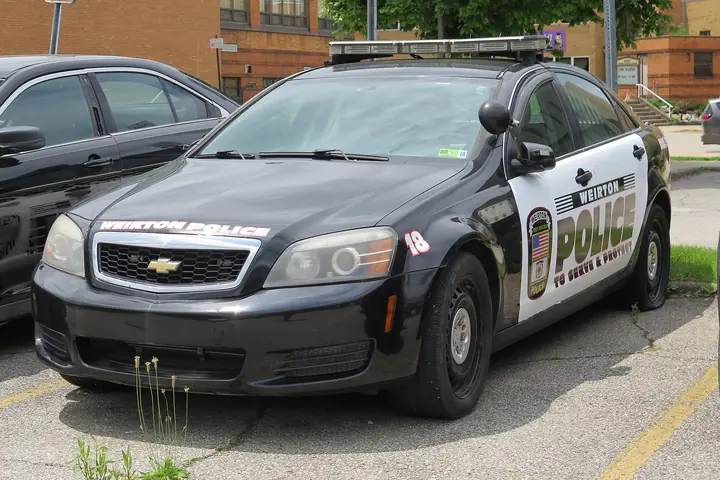
The Chevrolet Caprice PPV is a full-size, rear-wheel-drive police sedan that General Motors sold to American law enforcement agencies for the 2011 through 2017 model years. PPV stands for Police Patrol Vehicle, GM's own name for the car when it was announced. It was not an American design. The Caprice Police Patrol Vehicle was a rebadged Holden WM/WN Caprice, built by GM's Australian subsidiary Holden and shipped to the United States as what Wikipedia's Chevrolet Caprice article calls a "captive import from Australia" (a vehicle built abroad by a carmaker's own subsidiary and sold under its domestic brand).
The verdict on this page is Out of production, and the record behind it is unambiguous. GM announced the discontinuation in January 2017, accepted final model-year 2017 orders through the end of February 2017, and Holden built the last Caprice PPV on Friday, May 19, 2017, according to GM Authority. Five months later, on October 20, 2017, Holden ended all Australian vehicle production at its Elizabeth plant. There was no plant left to build the car, and GM has offered no Caprice police sedan since.
A Holden underneath: how it differs from the cars people confuse it with
The Caprice PPV is often described as a police version of the Chevrolet SS or the Holden Commodore. That description is close but wrong. The police car was the long-wheelbase Holden Caprice, part of the Statesman and Caprice line of large Holden sedans (the Holden Statesman was the companion luxury model built on the same long body). The Chevrolet SS, sold at retail in the United States, was the shorter Commodore-based car. Government Fleet, the fleet trade publication, called the SS the Caprice PPV's "retail sister vehicle": related, built by the same company, but not the same body.
The difference shows up in the specification sheet. The model-year 2017 Caprice PPV rode on a 118.5-inch wheelbase, measured 204.2 inches long and offered 112.0 cubic feet of interior volume, according to the factory data GM supplied to Michigan State Police. Its trunk held 17.4 cubic feet with a full-size spare, and the fuel tank held 19.0 gallons. When GM launched the car in 2009, it claimed 112 cubic feet inside and an 18-cubic-foot trunk, and GM's Jim Campbell called it "superior to the Crown Victoria in key areas."
Government Fleet reported that the car was built at Holden's plant in Elizabeth, Adelaide, South Australia, where it was sold locally as the Holden Caprice.
Performance: what Michigan State Police testing shows
Michigan State Police (MSP) publishes an annual evaluation of new police vehicles, and its test books are the primary record for the Caprice. Every MSP figure on this page is a clean-roof result: the car is tested with no lightbar, spotlights or antennas, so an equipped patrol car will usually perform below these numbers. MSP's purchasing criteria require 0 to 60 mph in 9.0 seconds or less and 0 to 100 mph in 24.6 seconds or less, and MSP states that no sanctioning body defines the term "pursuit rated." Both Caprice engines cleared MSP's acceleration thresholds in every MSP test year reviewed for this page.
Model year 2011: the comparison that explains the car
The first MSP test of the Caprice, for model year 2011, set it against the final Ford Crown Victoria-based Police Interceptor. The Caprice 9C1 with the 6.0L V8 ran 0 to 60 mph in 6.18 seconds and reached 148 mph. The Ford Police Interceptor 4.6L ran 9.01 seconds and 129 mph. In the same book, the Dodge Charger 5.7L posted 6.24 seconds and 146 mph, and the front-drive Chevrolet Impala 9C1 posted 8.78 seconds and 138 mph. For an agency replacing a Crown Victoria fleet, the Caprice offered close to three seconds of improvement to 60 mph without giving up rear-wheel drive.
That first test was not clean in another sense. MSP drivers reported a "floating sensation" at speed and vibration under heavy braking, and one run was aborted for loss of engine power. GM later found that the pre-production, hand-built prototype front struts had internal parts failures and that the rear suspension cradle needed stiffer bushings. MSP retested on October 7 after the fixes and described handling as "much improved," but the original test-day times remained the official results.
Later model years
- MY2014: 3.6L V6, 7.45 s to 60 mph, 18.31 s to 100 mph, 148 mph; 6.0L V8, 6.01 s, 14.35 s, 155 mph.
- MY2016: 3.6L V6, 8.27 s, 20.29 s, 146 mph; 6.0L V8, 6.26 s, 14.84 s, 155 mph.
- MY2017: 3.6L V6, 7.91 s, 19.29 s, 147 mph, quarter mile 16.06 s; 6.0L V8, 6.11 s, 14.40 s, 155 mph, quarter mile 14.58 s.
One figure needs a correction. GM's manufacturer copy in the MSP model-year 2016 and 2017 books says the V8 Caprice "achieved a top speed of 156 mph at the 2015" MSP test. That is GM's marketing statement as printed in the book, not MSP's own table. MSP's tables in the 2014, 2016 and 2017 books show 155 mph for the 6.0L.
History: from the 2009 announcement to the last car in 2017
GM announced the 2011 Caprice Police Patrol Vehicle at the International Association of Chiefs of Police (IACP) convention in Denver in early October 2009. The launch material listed the 6.0L V8 at an "estimated 355 hp" and "384 lb.-ft." with Active Fuel Management (GM's cylinder-deactivation system) and E85 ethanol capability, and said a V6 "will also be available" by 2012. Ordering was to open in 2010, with cars in service in early 2011. MSP's model-year 2011 book confirms that the first year was V8-only, with a 6L80E six-speed automatic and a 2.92:1 axle.
The car belongs to a long line. The 1991 to 1996 B-body Caprice 9C1, with a detuned 260 hp LT1 5.7L V8, is described by Wikipedia as "one of the quickest and most popular modern-day police vehicles," and its production ended in December 1996. The 2011 car revived the Caprice name for police work after more than a decade, but as an Australian Holden design rather than a successor to the American B-body.
Sales never reached the scale GM needed. GM Authority's sales table, a secondary source that counts calendar-year US deliveries rather than production, shows 3,899 Caprices in 2013 (the peak), 3,727 in 2014, 1,845 in 2015, 1,021 in 2016 and 693 in 2017. When GM announced the end of the program in January 2017, Government Fleet reported four reasons: slow adoption since the 2011 launch, including order-to-delivery times of about four months in 2012; agencies shifting to pursuit-capable SUVs such as the Chevrolet Tahoe PPV; the phase-out of the Chevrolet SS; and GM's decision to stop building vehicles in Australia.
The sources do not fully agree on the length of the run. Government Fleet's 2017 article body says the Caprice PPV lasted six model years, while the same article's meta description says seven. MSP test books confirm Caprice entries for model years 2011 and 2017, which spans seven model years; the 2012, 2013 and 2015 books were not reviewed for this page.
Size, fuel use and the V8 versus V6 trade-off
The Caprice's clearest advantage over its sedan rivals was space. In the MSP model-year 2017 book, GM listed 112.0 cubic feet of interior volume for the Caprice, against 104.7 cubic feet for the Dodge Charger Pursuit in the same book. That margin matters in a patrol car, where a partition (the cage that separates the front seats from the prisoner area) and front-seat equipment consume space that a civilian sedan never gives up.
GM described the 6.0L V8 as "a no-cost option" in its model-year 2017 specifications, so the V8 carried no price premium on the order form. The trade-off was fuel. The 3.6L V6, rated at 301 hp and 265 lb-ft, carried EPA ratings of 18 city, 26 highway and 21 combined mpg. The 6.0L V8, at 355 hp and 384 lb-ft, was rated 15, 24 and 18 mpg. In MSP's 2017 testing the V8 reached 60 mph about 1.8 seconds sooner (6.11 against 7.91 seconds) at a cost of about 3 mpg combined. Curb weight rose from 4,043 lb for the V6 to 4,162 lb for the V8.
Buying a retired Caprice PPV: what to check
A retired Caprice PPV is a scarce car. US deliveries peaked at 3,899 in 2013, according to GM Authority, so far fewer of these sedans reach public surplus sales than retired Dodge Chargers or Crown Victorias. Scarcity alone is not a reason to choose one. It is an orphan import: no new Caprice has been built since May 2017, and the body and trim came from an Australian car that was never sold new at retail in the United States. This page has found no primary source on parts availability or cost for Holden-specific components, and it makes no claim either way. A prospective owner should research that question before committing to a purchase.
Several checks apply to any retired police sedan, and the Caprice is no exception:
- Equipment removal. State law governs what must come off a marked car before it is sold. Texas House Bill 473 (2015) bars state agencies from selling or transferring a marked patrol car to the public until the police lights, sirens, spotlights, emblems and even the "outline of an emblem" are removed. Check the current text of your own state's rules.
- Title documents. Federal surplus vehicles sold through GSA Auctions and similar channels are routinely accompanied by Standard Form 97, the U.S. Government Certificate to Obtain Title, rather than an ordinary state title.
- Engine identification. Confirm whether the car is a 6.0L V8 or a 3.6L V6. Model year 2011 cars were V8-only.
Common misconceptions about the Caprice PPV
- "It is a police Chevy SS." It was the long-wheelbase Holden Caprice, a different body from the Commodore-based SS.
- "It was built in Port Elizabeth." GM Authority's report uses that phrase, but the plant was in Elizabeth, South Australia. Port Elizabeth is in South Africa.
- "Production ran through 2018." The last Caprice PPV was built on May 19, 2017, and 2017 was the final model year.
- "MSP clocked it at 156 mph." That number appears only in GM's manufacturer highlights. MSP's own tables show 155 mph.
- "The V6 car was too slow for patrol." The MY2014 V6 Caprice ran 7.45 seconds to 60 mph and 148 mph, well ahead of the MY2011 Crown Victoria-based Police Interceptor at 9.01 seconds and 129 mph.
The primary documents for this page are the Michigan State Police evaluation books hosted by the National Institute of Justice, including the model-year 2011 book and the model-year 2017 book, together with Government Fleet's 2017 discontinuation report.
Frequently asked questions
Where was the Chevy Caprice police car made?
The Caprice PPV was made in Australia, at Holden's plant in Elizabeth, Adelaide, South Australia. It was a rebadged Holden Caprice that General Motors imported to the United States as a captive import. The same plant built the car for Australian buyers under the Holden name. Holden ended all vehicle production there on October 20, 2017, five months after the last police Caprice was built.
What engine does the Caprice PPV have?
The Caprice PPV used a 6.0L V8 rated at 355 hp and 384 lb-ft from its 2011 launch, and a 3.6L V6 was added later. In model year 2017 the V6 was rated at 301 hp and 265 lb-ft. GM listed the V8 as a no-cost option, so the choice came down to performance against fuel use. Both engines drove the rear wheels through a six-speed automatic.
How fast is a Caprice PPV?
Michigan State Police measured a top speed of 155 mph and 0 to 60 mph in 6.11 seconds for the model-year 2017 Caprice 6.0L V8. The 3.6L V6 reached 147 mph and ran 0 to 60 mph in 7.91 seconds. These are clean-roof results with no lightbar or equipment fitted, so a fully equipped patrol car will usually be somewhat slower.
Why did Chevy stop making the Caprice PPV?
GM ended the Caprice PPV because it was closing Australian manufacturing, agencies were moving to SUVs such as the Tahoe PPV, and adoption had been slow. Government Fleet also cited long order-to-delivery times, about four months in 2012, and the phase-out of the related Chevrolet SS. GM announced the decision in January 2017, and Holden built the final car on May 19, 2017.
What was the last year of the Caprice police car?
Model year 2017 was the last year of the Caprice police car. GM accepted 2017 orders through the end of February 2017, and Holden built the final Caprice PPV on May 19, 2017. Michigan State Police tested both the 3.6L V6 and 6.0L V8 versions for model year 2017, and no Caprice appears in later MSP test books.
Is the Caprice PPV the same as the Chevy SS?
No, the Caprice PPV and the Chevrolet SS are related but different cars. Both came from GM's Australian subsidiary Holden, and Government Fleet called the SS the Caprice's retail sister vehicle. The police car, however, used the long-wheelbase Holden Caprice body from the Statesman and Caprice line, while the SS was based on the shorter Holden Commodore.
Can I buy a retired Caprice PPV?
Yes, but only after an agency retires it, through government surplus sales or later private resale. GM never sold the Caprice PPV to retail customers in the United States. State rules on removing police equipment apply before a marked car is sold; Texas HB 473, for example, requires removal of lights, sirens, emblems and emblem outlines. Check the current law in your state.
Sources
- Michigan State Police; hosted by National Institute of Justice (NCJRS) — 2011 Model Year Police Vehicle Evaluation Program
- ojp.gov/pdffiles1/nij/nlectc/245035.pdf
- ojp.gov/pdffiles1/nij/nlectc/249904.pdf
- ojp.gov/pdffiles1/nij/nlectc/250527.pdf
- government-fleet.com/146346/chevrolet-debuts-all-new-2011-caprice-police-pat…
- government-fleet.com/138582/gm-to-discontinue-chevrolet-caprice-ppv
- gmauthority.com/blog/2017/07/holden-produces-final-chevrolet-caprice-ppv/
- en.wikipedia.org/wiki/Chevrolet_Caprice