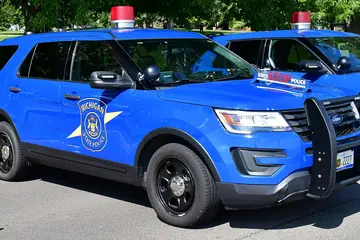
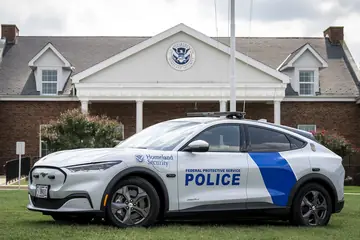
What police vehicle testing is
Police vehicle testing in the United States means two annual agency programs: the Michigan State Police (MSP) Police Vehicle Evaluation Program and the Los Angeles County Sheriff's Department (LASD) Law Enforcement Vehicle Test and Evaluation Program. Each agency runs the new model year's police vehicles through acceleration, top speed, braking and road-course tests, scores them on ergonomics and equipment installation, and publishes the results in a test book that any agency can use when choosing vehicles.
Neither program certifies anything. MSP states that meeting its criteria "does not certify a vehicle as being pursuit rated" and that "each agency must determine if the vehicle is suitable for the mission of their agency." LASD says "interpretation of test results is the responsibility of each agency." Both reports state that they are not endorsements of the products tested. The value of the programs is consistent, published measurement under controlled conditions, year after year.
Why it matters is put plainly by the National Institute of Justice (NIJ), the research arm of the U.S. Department of Justice. Its Compliance Testing program manager told NIJ's TechBeat magazine in 2017: "The purchase of patrol vehicles is one of the largest expenditures a law enforcement agency faces."
The Michigan State Police program
MSP began testing patrol cars in the 1950s. At first it requested quotations from manufacturers and tested only the lowest-quoted vehicle against its purchasing requirements. When manufacturer quotes came in "only $4.00 apart," MSP decided to test every vehicle. Its measurement equipment, MSP says, "has evolved from tape measure to global positioning systems," and it describes the program as "an internationally recognized resource for law enforcement agencies."
Two dates are often confused. MSP's testing began in the 1950s; NIJ dates the published annual evaluations to "every fall since 1975," with NIJ and National Law Enforcement and Corrections Technology Center (NLECTC) sponsorship beginning in 1981. NIJ also reported that MSP tested 275 vehicles, 209 cars and 66 motorcycles, between 2002 and 2017.
The MY2026 program tested 13 patrol vehicles and five motorcycles. The patrol vehicles were the Chevrolet Tahoe PPV (RWD and 4WD), Silverado PPV (Z7X and Z71 4WD) and Blazer EV PPV AWD; the Dodge Durango Pursuit (5.7L and 3.6L AWD) and Ram 2500 6.4L 4WD; the Ford Police Interceptor Utility (3.0L EcoBoost, 3.3L Hybrid and 3.3L AWD), F-150 Police Responder 3.5L EcoBoost 4WD and Mustang Mach-E GT eAWD. The motorcycles were three BMW R 1300 RT-P variants, a Harley-Davidson Road Glide and a Honda NT1100.
How the MSP tests work
Every patrol vehicle is tested with a clean roof, meaning no overhead light bar and no A-pillar spotlights, on original-equipment tires and with its electronic speed limiter in place unless noted. MSP warns that once lights, spotlights, antennas, sirens and other emergency equipment are installed, "overall performance may be lower than reported." Manufacturers may submit a half-page highlight for each vehicle, which MSP labels "not an opinion or endorsement from the MSP."
Acceleration and top speed
Acceleration runs take place at the Chelsea Proving Grounds in Chelsea, Michigan, on a 4.7-mile, 140 mph banked oval. Each vehicle makes four runs, two northbound and two southbound to cancel the effect of wind, timed with a Racelogic VBox 3i GPS unit. MSP averages the four runs for 0-60, 0-80 and 0-100 mph and records distance to 100 and 120 mph. After the fourth run the vehicle continues to its manufacturer-limited top speed, which it must reach within 14 miles of a standing start. NIJ's 2017 article calls the same site the "FCA Proving Grounds"; both names refer to the Chelsea facility.
Braking
The brake test is 20 full ABS stops from 60 mph to zero on the 1.59-mile concrete straightaway at Chelsea: ten stops, a cool-down lap of about 3.18 miles at 45 mph, then ten more by a second driver. The score is average deceleration in ft/s², calculated as initial velocity squared divided by twice the stopping distance. In MSP's worked example, 23.198 ft/s² corresponds to about 166.9 feet from 60 mph.
Vehicle dynamics
The dynamics test runs at Grattan Raceway in Belding, Michigan, a 2-mile road course of hills, curves and corners that simulates pursuit and emergency driving "with the exception of other traffic." Four drivers each drive eight timed laps, 32 in total, and the score is the combined average of each driver's five fastest laps.
Ergonomics, communications and fuel economy
At least four officers independently score each vehicle for comfort, convenience, instrumentation and visibility on a 1-to-10 scale (1 unacceptable, 5 average, 10 superior). Michigan Public Safety Communications System personnel score the relative difficulty of installing radios and emergency equipment. Fuel economy in the MY2026 book is not measured by MSP: it is EPA estimates supplied by manufacturers. Examples include 21 city, 24 highway and 23 combined mpg for the PIU Hybrid AWD and 14/18/16 for the Tahoe PPV 5.3L RWD; the Blazer EV PPV is listed at a 286-mile range, a manufacturer figure.
MSP purchasing criteria, then and now
The test results feed MSP's own purchasing criteria. A vehicle must reach 0-60 mph in 9.0 seconds, 0-80 in 14.9 seconds and 0-100 in 24.6 seconds; reach 110 mph within 0.92 mile and 120 mph within 1.70 miles; average 25.79 ft/s² over the 20 stops from 60 mph; and complete all 32 Grattan laps "without major component failure." These are one agency's requirements, not a national standard.
The criteria have tightened considerably. MSP's 1987 model year qualification required 0-60 mph in 12.9 seconds or less and 0-100 mph in 42.3 seconds or less, according to the scanned 1987 report published by NIJ. In those 1987 tests the Ford Mustang 5.0L five-speed ran 0-60 in 7.64 seconds with a 139.6 mph top speed, against 11.85 seconds and 109.2 mph for the Ford Crown Victoria 302.
The MY2026 test book shows how far the field has moved. Representative clean-roof results from its performance overview:
- Ford PIU 3.0L EcoBoost: 0-60 mph in 5.95 seconds, 148 mph, 137.24 ft from 60 mph, and the fastest dynamics lap time in the overview at 1:35.95.
- Ford Mustang Mach-E GT: 0-60 mph in 4.03 seconds, 124 mph, and the shortest stopping distance at 122.45 ft, but a communications score of 5.33 against 8.71 to 9.78 for the other vehicles, and an ergonomics score of 6.30.
MSP also posts preliminary results for the next model year while testing proceeds. Its MY2027 preliminary file states that results update as data is entered, so those figures should be treated as provisional until the final book appears.
The Los Angeles County Sheriff's Department program
LASD "first implemented its police vehicle testing program in 1974," and its MY2023 booklet describes the "48th Annual Law Enforcement Vehicle Test and Evaluation Program." Testing for that model year took place October 24 to 28, 2022, at Auto Club Speedway in Fontana, California. Chrysler, GM and Ford submitted police-package vehicles, and all completed the test satisfactorily. Whether LASD has published booklets for later model years was not confirmed for this page.
LASD states two goals: to give agencies data for vehicle selection, and to give manufacturers input so they can better meet law enforcement needs. Its MY2023 phases were vehicle dynamics (a 32-lap high-speed course), a city course, braking, acceleration, heat evaluation, communication, ergonomics and fuel efficiency.
- City street course: added for the 1997 model year to reproduce city-block distances and the turns typical of inner-city driving. It is run only on factory police-package vehicles.
- Special service vehicles: tested when manufacturers offer them, "because many law enforcement agencies buy 'non-police packaged' vehicles," in the same way as police-package vehicles but without the city course.
- Heat evaluation: pass-fail against the manufacturer's allowable operating temperatures. Transmission fluid, engine oil and coolant temperatures are read through the data link connector after the 32 high-speed laps; power steering fluid is read by probe.
- Fuel efficiency: recorded during real-world ergonomics driving, because EPA estimates "are based on simulated driving conditions." The MY2023 booklet reused 2021 results for unchanged vehicles, including 20 mpg for the PIU Hybrid, 18 mpg for the PIU 3.3L, 14.3 mpg for the Tahoe PPV 2WD and 16.1 mpg for the Charger 5.7L.
Battery-electric vehicles forced a protocol change. The 32-lap test normally uses four drivers of eight laps each with five-minute rests to heat-soak the brakes. For BEVs, LASD ran 16 laps, allowed 90 minutes of recharging, then ran the second 16, to limit the power reduction that comes with a falling state of charge. LASD compares BEV thermal power reduction to an internal-combustion "limp mode." The full protocol is in the LASD MY2023 booklet.
How the two programs differ
MSP runs its performance tests on an oval and straightaway at Chelsea and a 2-mile road course at Grattan, and scores ergonomics and equipment installation. LASD adds a city street course for police-package vehicles, a pass-fail heat evaluation, and fuel consumption measured in real driving rather than EPA estimates. A reader comparing fuel figures across the two books is therefore comparing different things: MSP's MY2026 numbers are EPA estimates, and LASD's MY2023 numbers are measured but partly carried over from 2021.
Both programs leave the weighting to the buyer. LASD says each agency weights each phase by its own needs, including cost and operational considerations, and calls that weighting a subjective decision. NIJ notes that an agency's urban, suburban or rural setting and its climate also figure into the choice. A vehicle with the quickest road-course laps may be a poor fit for an agency whose officers spend most of a shift at idle in heavy traffic, and the test books are built to let each agency make that call.
Reading the results correctly
- The results are clean-roof figures. An equipped patrol vehicle carries a light bar, spotlights, antennas and siren, and MSP says its performance may be lower than reported.
- A pass is not a certification. MSP says no sanctioning body defines pursuit-rated and that its criteria only show a vehicle can do MSP's job.
- A test book is not a recommendation. Both MSP and LASD state that their reports are not endorsements.
- Model year matters. The same configuration can post different figures from one year to the next; the PIU 3.0L EcoBoost ran 0-60 in 5.95 seconds in MY2026 and 6.26 seconds in MSP's MY2027 preliminary results.
The archive is useful beyond new-vehicle purchasing. NIJ's 2017 TechBeat article notes that reports going back to 1998 "may prove useful to administrators who want to purchase used vehicles," and those reports were downloaded 2,319 times from NIJ's JUSTNET site in 2016. The MY2011 book, for example, records the Crown Victoria-based Ford Police Interceptor 4.6L at 0-60 mph in 9.01 seconds and 129 mph, against 6.18 seconds and 148 mph for the Chevrolet Caprice 6.0L, 6.24 seconds and 146 mph for the Dodge Charger 5.7L, and 8.78 seconds and 138 mph for the Chevrolet Impala 9C1 3.9L. The current hosting status of the JUSTNET archive was not checked for this page.
Frequently asked questions
What does the Michigan State Police test on police cars?
MSP tests acceleration from 0-60, 0-80 and 0-100 mph, top speed, 20 ABS stops from 60 mph, and 32 timed laps of the Grattan Raceway road course. Officers also score ergonomics, and communications staff score how hard radios and equipment are to install. Fuel economy in the MY2026 book is EPA estimates supplied by manufacturers.
Does passing the MSP test make a car pursuit rated?
No. MSP states that meeting its criteria "does not certify a vehicle as being pursuit rated" and that no sanctioning body or specific performance criteria define the term. Meeting the criteria shows only that a vehicle can perform the job MSP requires; manufacturers apply the pursuit-rated label themselves.
Are police cars tested with light bars installed?
No. MSP tests every patrol vehicle with a clean roof, without an overhead light bar or A-pillar spotlights, on original-equipment tires. MSP warns that once lights, antennas, sirens and other emergency equipment are installed, overall performance may be lower than the published figures.
When did LASD start testing police vehicles?
The Los Angeles County Sheriff's Department began its police vehicle testing program in 1974. Its MY2023 booklet was the 48th annual Law Enforcement Vehicle Test and Evaluation Program, with testing held October 24 to 28, 2022, at Auto Club Speedway in Fontana, California.
Where are police cars tested?
MSP tests acceleration, top speed and braking at the Chelsea Proving Grounds in Chelsea, Michigan, and vehicle dynamics at Grattan Raceway in Belding, Michigan. LASD ran its MY2023 program at Auto Club Speedway in Fontana, California, including a city street course for police-package vehicles.
Who publishes police vehicle test results?
MSP and LASD each publish their own test books. The National Institute of Justice and its NLECTC system have sponsored MSP's evaluations since 1981 and have hosted past reports, which NIJ says may help administrators buying used vehicles. Neither agency's report is an endorsement of any vehicle.
Are the MSP fuel economy figures measured?
No. The fuel economy table in MSP's MY2026 test book reprints EPA estimates supplied by manufacturers. LASD instead measures fuel use during real-world ergonomics driving, because EPA estimates rest on simulated conditions, although its MY2023 booklet carried over 2021 figures for vehicles that had not changed.
Sources
- Michigan State Police, Precision Driving Unit — 2026 Model Year Police Vehicle Evaluation Program
- Los Angeles County Sheriff's Department — 48th Annual Law Enforcement Vehicle Test and Evaluation Program, Vehicle Model Year 2023
- National Institute of Justice / NLECTC — Michigan State Police Vehicle and Motorcycle Evaluations Help Inform Purchasing Decisions (TechBeat)
- Michigan State Police, Precision Driving Unit — 2027 Police Vehicle Evaluation - Live Results (Preliminary)
- Michigan State Police; hosted by National Institute of Justice (NCJRS) — 2011 Model Year Police Vehicle Evaluation Program
- Michigan State Police; published by National Institute of Justice — 1987 Model Year Patrol Vehicle Testing