What the Police Interceptor Sedan is, and why it is out of production
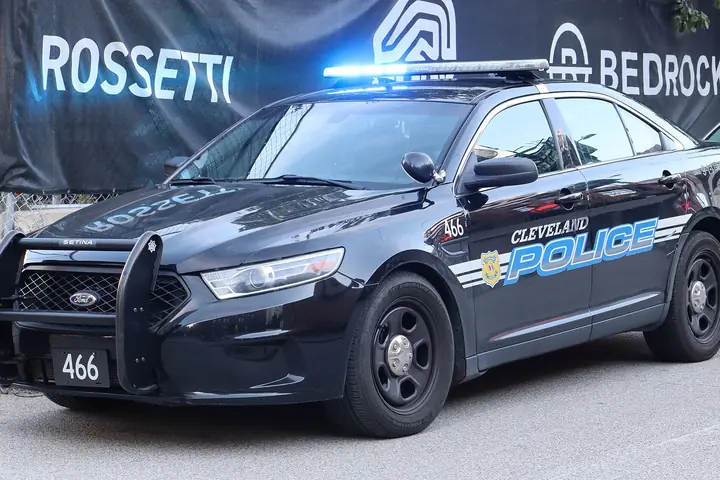
The Ford Police Interceptor Sedan is the police-specification version of the sixth-generation Ford Taurus, a four-door sedan Ford sold to law enforcement agencies for model years 2013 through 2019. It was pursuit-rated, a manufacturer designation meaning Ford built and approved it for high-speed police driving. Ford unveiled it on March 12, 2010 as the replacement for the Crown Victoria Police Interceptor, and it went on sale in 2012 alongside the Explorer-based Police Interceptor Utility, both built at Chicago Assembly.
The verdict on this page is out of production. In late April 2018 Ford announced it would end the sedan after model year 2019, with production finishing by March 2019 as Ford wound down the entire Taurus line. Government Fleet reported the order timeline: final model year 2018 orders closed June 8, 2018, the model year 2019 order bank opened June 13, and final orders were due early in the fourth quarter of 2018. Ford's current police vehicle lineup no longer lists the sedan.
The sedan's short run is best understood as the second half of a two-car plan. When Ford announced the Crown Victoria's replacement in 2009, it said the new Interceptor would be offered "without interruption" and noted that it then sold about 75% of U.S. police vehicles, roughly 45,000 a year. Ford delivered on continuity, but the market chose the Utility.
How it differed from the civilian Taurus
The Police Interceptor Sedan used the Taurus body, but its drivetrain lineup was its own. Wikipedia notes that all-wheel drive (AWD) was standard on every engine, that front-wheel drive (FWD) was a cost-saving option available only with the naturally aspirated 3.5L V6, that the 3.7L V6 was not offered on the civilian Taurus, and that the EcoBoost engine came from the Taurus SHO.
Michigan State Police (MSP) published the final specifications in its model year 2018 test book. All versions used a six-speed automatic and a 19-gallon fuel tank:
- 3.5L V6 FWD (sales code P2L, 998): 288 hp at 6,500 rpm, 254 lb-ft; EPA 17 mpg city and 25 highway.
- 3.7L V6 AWD (P2M, 99K): 305 hp at 6,500 rpm, 279 lb-ft; EPA 16 city and 22 highway.
- 3.5L EcoBoost twin-turbo V6 AWD (P2M, 99T): 365 hp at 5,500 rpm, 350 lb-ft from 1,500 to 5,250 rpm; EPA 15 city and 22 highway.
A separate model shared the body. The Special Service Police sedan (P2L, 999) used a 2.0L EcoBoost four-cylinder with 240 hp and 270 lb-ft, rated 19 mpg city and 28 highway. It was a non-pursuit vehicle, intended for duties that do not involve high-speed driving, and it should not be confused with the Police Interceptor. Sources disagree on when it ended: Wikipedia says after model year 2017, yet MSP tested a Ford Special Service Police sedan in its model year 2018 book.
Whether the 3.5L EcoBoost was available from the 2013 launch or added later was not confirmed in the research for this page.
Performance: what Michigan State Police testing showed
MSP figures are clean-roof test results, recorded without lightbars, spotlights or other equipment, so an equipped patrol car is slower. MSP's model year 2018 book is the last that includes the Police Interceptor Sedan; the model year 2019 book lists no Police Interceptor Sedan, and Ford's only sedan in it was the Fusion-based Police Responder Hybrid (9.24 seconds to 60 mph, 119 mph).
In model year 2018 testing the sedans recorded:
- EcoBoost AWD: 0-60 mph in 5.68 seconds, 0-100 mph in 13.50 seconds, 149 mph top speed, quarter mile in 14.14 seconds.
- 3.7L AWD: 7.44 seconds, 18.23 seconds, 133 mph.
- 3.5L FWD: 7.49 seconds, 18.67 seconds, 132 mph.
- Special Service Police sedan (non-pursuit): 8.31 seconds, 120 mph.
Every Police Interceptor Sedan variant cleared MSP's current purchasing criteria of 9.0 seconds to 60 mph and 24.6 seconds to 100 mph. The EcoBoost was among the quickest vehicles in the book: the Dodge Charger 5.7L AWD ran 5.86 seconds and 150 mph, the EcoBoost Police Interceptor Utility 6.30 seconds and 132 mph, and the Chevrolet Tahoe 5.3L RWD 7.73 seconds and 134 mph.
The improvement over the car it replaced is large. In MSP's model year 2011 test, the final Crown Victoria Police Interceptor (3.27 axle) needed 9.01 seconds to reach 60 mph and topped out at 129 mph. The EcoBoost sedan cut more than three seconds from that time. The full data are in the MSP 2018 Model Year Police Vehicle Evaluation Program, hosted by the National Institute of Justice.
Why agencies moved to the Utility, and why Ford ended the sedan
The sedan lost on space and on buyer preference rather than on speed. Ford said the Utility accounted for 80% of its Police Interceptor sales in 2017, and that it planned to phase out most sedans across its lineup by 2020. Ford's Stephen Tyler described the market's shift from "rear-wheel drive, V-8-powered, body-on-frame sedans" to "efficient V-6-powered vehicles with standard all-wheel-drive," a description that fit both new Ford Interceptors.
MSP's model year 2018 figures show the space gap: 103.0 cubic feet of combined interior volume for the sedan against 118.4 for the Utility. Fuel economy offered little reason to prefer the sedan, since its EPA city ratings of 15 to 17 mpg were close to the first-generation Utility's 15 mpg city.
Agencies were not unanimous. In 2018 Government Fleet reported that Charleston's fleet manager preferred sedans but expected most agencies to convert, and that SUVs need two partitions and a rear vault, raising upfit cost (upfit is the equipment an agency adds after delivery, such as lights, partitions and consoles). The same report said NYPD planned a pilot of 60 to 100 Chevrolet Traverse units and Philadelphia expected a mix of Chargers and SUVs. For agencies that still wanted a Ford sedan, Ford kept the Fusion-based Police Responder Hybrid Sedan, a pursuit-rated model introduced in 2017.
Early adopters show the same preference. Seattle's police department chose the Utility, not the sedan, when it replaced its Crown Victorias in 2013, and Washington State Patrol's Utility made up over 70% of its pursuit fleet by the time of a 2020 legislative audit.
Buying a retired Police Interceptor Sedan: what to check
Every Police Interceptor Sedan is now a 2019 model or older, and units reach the public through agency surplus. The research for this page found no primary or authoritative source documenting common mechanical faults of used sedans; forum claims were not verified and are not repeated here. The checks below are structural.
- Identify the exact model. MSP's model year 2018 book lists the "Ford Police Interceptor 3.7L AWD" (the sedan) beside the "Police Interceptor Utility," so the name alone does not tell you which vehicle you are looking at. The sales code separates the pursuit sedans (P2L 998, P2M 99K, P2M 99T) from the non-pursuit Special Service sedan (P2L 999).
- Drive configuration. A FWD car can only be the base 3.5L; the 3.7L and EcoBoost are AWD.
- Idle hours and mileage. Patrol idling adds wear that the odometer does not record; one town fleet policy equates an hour of idling to about 33 miles of driving, an approximation. Replacement thresholds vary, and Newport Beach, California, for example, schedules patrol vehicles for replacement at 75,000 miles or four years.
- Parts and space. The model has been out of production since 2019. No source quantifies parts availability, but a buyer who needs cargo or equipment room should note that the sedan offers less interior volume than the Utility.
Common misconceptions about the Taurus Police Interceptor
"The Taurus Interceptor is front-wheel drive." AWD was standard. FWD was an option only on the base 3.5L V6.
"The Special Service sedan is a Police Interceptor." The 2.0L EcoBoost Special Service Police sedan was a separate non-pursuit model with its own sales code.
"Ford replaced the Crown Vic with one car." Ford launched two successors at once, the Sedan and the Utility, and the Utility won most of the orders.
"A V6 police car must be slower than the old V8." The EcoBoost V6 sedan reached 60 mph more than three seconds sooner than the final V8 Crown Victoria in MSP testing.
Frequently asked questions
What years was the Ford Police Interceptor Sedan made?
The Police Interceptor Sedan was sold for model years 2013 through 2019, and production ended by March 2019. Ford unveiled it in March 2010, and it went on sale in 2012 alongside the Police Interceptor Utility. Ford announced the discontinuation in April 2018, and final orders were due early in the fourth quarter of 2018.
Is the Ford Police Interceptor Sedan a Taurus?
Yes, the Police Interceptor Sedan was based on the sixth-generation Ford Taurus. It used police-specific drivetrains, including a 3.7L V6 that was not offered on the civilian Taurus and standard all-wheel drive. Its EcoBoost engine came from the Taurus SHO, and it ended production with the rest of the Taurus line in 2019.
What engine is in a Taurus police car?
The Police Interceptor Sedan used one of three V6 engines: a 3.5L V6 (288 hp), a 3.7L V6 (305 hp) or a 3.5L twin-turbo EcoBoost V6 (365 hp), all with a six-speed automatic. A separate non-pursuit Special Service Police sedan used a 2.0L EcoBoost four-cylinder rated at 240 hp.
How fast is the Taurus Police Interceptor?
In Michigan State Police model year 2018 testing, the EcoBoost AWD sedan reached 60 mph in 5.68 seconds with a 149 mph top speed. The 3.7L AWD ran 7.44 seconds and 133 mph, and the 3.5L FWD 7.49 seconds and 132 mph. These are clean-roof results without lightbars or equipment.
Why did Ford stop making the Police Interceptor Sedan?
Ford stopped making it because police buyers moved to SUVs and Ford was dropping most of its sedans. By 2017 the Utility made up 80% of Ford's Police Interceptor sales. Ford described a shift toward V6 vehicles with standard all-wheel drive, and the larger Utility offered more interior and equipment space.
Is the Taurus Police Interceptor all-wheel drive?
Yes, all-wheel drive was standard on the Taurus-based Police Interceptor. Front-wheel drive was available only as a cost-saving option with the base 3.5L V6. The 3.7L V6 and 3.5L EcoBoost versions were AWD, which MSP's model year 2018 test book confirms through their P2M sales codes.
What replaced the Ford Police Interceptor Sedan?
Most agencies replaced it with the Ford Police Interceptor Utility, the Explorer-based model that already accounted for 80% of Ford's Interceptor sales in 2017. For agencies that wanted to stay with a Ford sedan, Ford kept the Fusion-based Police Responder Hybrid Sedan, a pursuit-rated model introduced in 2017.
Sources
- Michigan State Police; hosted by National Institute of Justice (NCJRS) — 2011 Model Year Police Vehicle Evaluation Program
- ojp.gov/pdffiles1/nij/nlectc/252819.pdf
- ojp.gov/pdffiles1/nij/nlectc/252820.pdf
- at.ford.com/us/en/home/news-media/news/2025/1/tbt-01-09-2025.html
- government-fleet.com/301751/ford-to-end-pi-sedan-production-in-march-2019
- government-fleet.com/302909/the-police-interceptor-sedan-leaves-the-market-h…
- nbcnews.com/id/wbna33916598