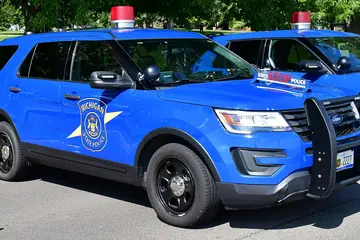
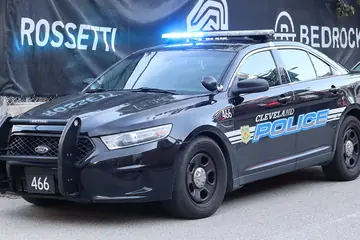
What a retired Police Interceptor Utility is
The Ford Police Interceptor Utility (PIU) is the Explorer-based police vehicle Ford put on sale in 2012, alongside the Taurus-based sedan, as the successors to the Crown Victoria. The first generation covers model years 2013 through 2019. The second, built on the sixth-generation Explorer, began with MY2020 and was updated for 2025. Ford still builds it at Chicago Assembly, so retired units range from early 3.7L trucks to recent hybrids.
Agencies retire them young by the calendar and old by use. Washington State Patrol replaced its PIUs at an average of 118,000 miles in 2018 and 2019, and Seattle's fleet division replaces gasoline PIUs at five years and hybrids at seven. Two consequences follow. Retired PIUs commonly carry high mileage and engine idle time, and some still fall inside Ford extended-coverage periods that run 10 or 11 years. A buyer who has the VIN and the warranty start date can work out which still apply, and which recalls remain open.
How to confirm a genuine PIU from the VIN
Ford itself defines a police Explorer by the VIN. Its dealer bulletin for program 17B25 refers to “Non-Police Ford Explorer vehicles (with body codes other than K7A or K8A as denoted by VIN positions 5, 6, and 7).”
- K8A is the all-wheel-drive police body code. NHTSA's vPIC decoder (the federal database built from manufacturers' VIN-decoding submissions) reads 1FM5K8A patterns as Explorer, trim “Police,” AWD, for MY2013 through 2026.
- K7A is the front-wheel-drive police code. vPIC decodes it as “Police” for MY2013 and as a FWD 3.7L with no trim for 2014-2015; no Ford document confirming a FWD PIU after 2013 was found.
- Position 8 is the engine: R = 3.7L V6; T = 3.5L EcoBoost (twin-turbocharged) V6; B = 3.3L V6; C = 3.0L EcoBoost V6; W = 3.3L hybrid. B, C and W appear from 2020.
Those letters match the order codes in Michigan State Police (MSP) test books: K8A 99R and 99T for MY2018, and K8A 99W, 99C and 99B for MY2020. For contrast, a civilian Explorer Sport with the same 3.5L EcoBoost decodes as K8G, trim “Sport.” An Illinois agency's 2018 K-9 unit sold on the state's iBid surplus site, VIN 1FM5K8AR3JGB34677, decodes cleanly as a 3.7L police Explorer.
A push bar, a column shifter or a spotlight hole does not make an Explorer a PIU. Nor does a matching code prove police service: vPIC shows how Ford coded the VIN pattern, while the selling agency's records show where the vehicle actually worked.
Model years and what changed
First generation, MY2013 to MY2019
The launch PIU used the 3.7L V6 (304 hp) with a six-speed automatic and a 3.65:1 axle. In MSP's MY2013 testing, which uses clean-roof vehicles without lightbars or equipment, it ran 0-60 mph in 7.96 seconds with a 132-mph top speed. The 3.5L EcoBoost (365 hp, 3.16:1 axle) arrived as a “2014.5” model in MSP's MY2014 book; the common statement that it was “added for MY2014” is close but less precise. The MY2016 refresh, announced in February 2015, brought new front and rear styling and headlamps, a new instrument panel, an “enhanced electrical system,” new police wiring packages, a standard rear-view camera and options including Level III ballistic door panels and blind-spot detection.
Second generation, MY2020 on
All three powertrains use a 10-speed automatic with full-time AWD: the 3.3L hybrid (3.73 axle, 19.0-gallon tank), the 3.0L EcoBoost (3.31 axle) and the 3.3L gas V6 (3.73 axle), the last two with a 21.4-gallon tank. The 2025 update made automatic emergency braking, blind-spot monitoring, a 12.3-inch digital cluster and Police Engine Idle standard. For a buyer, the generation line at 2020 matters most, because the engines, the recalls and the service programs divide along it.
Safety recalls by campaign number
NHTSA files the PIU under “Explorer,” so a search by model name mixes police and civilian campaigns. These name the PIU or police Explorers directly:
- 13V-227 (MY2013, Ford 13S04): the fuel delivery module may crack and leak; follow-up 15V-812.
- 16V-245 (2014-2015 built Jan. 17-May 31, 2014): improperly welded rear toe links may fracture. Trade press reported that PIUs built at Chicago in that window were included.
- 16V-925 (2017 with the 3.5L EcoBoost): turbocharger oil supply tubes may leak oil, a fire risk.
- 17V-530 (2017): steering gear heat shield fasteners may corrode.
- 22V-255 (2020-2021 police hybrid and 3.3L): a rear axle mounting bolt may fracture and disconnect the driveshaft; follow-ups 23V-199, 23V-675 and 25V-166.
- 23V-305 (2020-2022 with the 12.1-inch Integrated Computer Screen): the backup camera image may not appear.
- 24V-598 (2020-2022 with the PIU package, 3.3L hybrid and gas, 85,238 units): engine failure can release oil and fuel vapor and cause an under-hood fire.
The 24V-598 defect report is the most important document for anyone considering a 2020-2022 3.3L unit. Ford reported 13 under-hood fires in North America as of July 9, 2024, all on PIUs with 3.3L engines made before June 2, 2022, and “no reports of fire ... on non-police vehicles.” It traced them to connecting-rod bearing seizure and noted that repeated wide-open-throttle runs to maximum rpm “are far more frequent in police applications.” The remedy is a PCM (powertrain control module) software update plus inspection, with long-block replacement if needed.
Explorer-wide rear toe-link recalls for 2011-2019 models (19V-435, 21V-537, 26V-101) do not exclude police units. The full 17-character VIN in NHTSA's recall lookup shows what remains unrepaired on a given vehicle.
Ford service programs: which transfer and which do not
Ford's customer satisfaction programs and extended-coverage programs are not safety recalls, and each bulletin sets its own terms. Ford documents hosted by NHTSA show that most police-specific coverage follows the vehicle to its next owner.
- 24N10 (2020-2022 PIU): a one-time engine long-block repair, if needed, for 10 years or 150,000 miles from the warranty start date. “Coverage is automatically transferred to subsequent owners.”
- 19M01 (2013-2019 3.7L) and 22M06 (2019 3.7L built May 18, 2018-Feb. 26, 2019): catalytic converter coverage to 11 years or 120,000 miles, because “aggressive law enforcement driving maneuvers can result in an overheated catalytic converter.” Transferable; paired with emission recalls 19E02 and 22E11.
- 17M06 (2014-2016): canister purge valve, 10 years or 120,000 miles, transferable.
- 17N04 (2014-2016): front door trim panels, 5 years or 100,000 miles, transferable.
- 21N13 (2020): hard-to-turn door lock cylinders; dealers replace the front latches and cut four new keys; 6 years, transferable.
The exception is 16N01 (2013-2015 PIU and Police Interceptor Sedan), for peeling paint and rust around the liftgate lock cylinder. Ford limited it to “original owners of vehicles that are currently in police or law enforcement service,” so it does not reach a private buyer. Other programs have simply expired: 17B25, the exhaust-odor sealing program for 2013-2017 units, ran through Sept. 30, 2018; 16B32 (throttle body) ended Sept. 30, 2017; and 24B34 (hybrid PCM update) ran through June 30, 2025.
Two Ford service messages explain faults a buyer may meet. SSM 47547 warns of “reduced top speed after a transmission fluid service with unapproved fluid” and calls for Mercon LV only. SSM 54425 ties a P061B warning on hybrids to police equipment wired to the 12V batteries instead of the rear power access point, a wiring fault rather than a failed hybrid system.
What decommissioning leaves, and where PIUs are sold
What stays on a retired PIU varies by agency. Miami-Dade County's Procedure 812 strips markings, emergency lighting, computers, prisoner inserts, radios and spotlights, and makes any remaining lighting inoperable. An Illinois listing for a 2018 K-9 unit at 58,000 miles, by contrast, conveyed the kennel and heat-alarm system, a cage, a brush guard and a lock box, while “Radios, computer dock, and mount do not convey.” That listing did not reach its reserve at $29,000, a single dated result rather than a value.
Holes matter more on a PIU than on most vehicles. Ford's 17B25 bulletin states that “aftermarket lighting and/or equipment mounted to the liftgate spoiler can compromise vehicle sealing,” and NHTSA closed its exhaust-odor investigation in 2023 after finding that upfit sealing problems produced the highest carbon monoxide readings. With 17B25 expired, an unsealed hole in the rear is now the buyer's repair. Ford's upfit page also notes the PIU's column shifter, which frees the console for police equipment, so console wiring and mounting damage are common places to look.
Retired PIUs are sold through state online surplus sites such as Illinois iBid, through city and county sales, and through federal GSA channels. This guide rates none of them.
When a particular PIU is a poor choice
- A 2020-2022 3.3L unit without proof of the 24V-598 repair. The PCM update and inspection should show as complete in the VIN's recall record, and the 24N10 long-block coverage should be checked against the warranty start date and mileage.
- A first-generation 3.7L with P0420 or P0430 codes and no remaining 19M01 or 22M06 coverage. Ford's own bulletins describe converter overheating as a police-duty pattern.
- A 2013-2019 unit without toe-link records. Several recalls apply, and Ford's police-only optional program 17G01 for 2013-2017 PIUs ran through Jan. 31, 2019.
- A 2013-2017 unit with open holes in the rear, since the free 17B25 sealing work is no longer available.
- Any unit that cannot be inspected or checked by VIN before the sale closes. Illinois listings allowed viewing by appointment only.
One widely repeated belief is not supported by the record. No NHTSA recall, investigation or Ford bulletin naming power transfer unit (PTU) failures on the PIU was found; MSP tested the EcoBoost PIU with an optional PTU cooler. That does not make the PTU trouble-free. It means a seller's or a forum's claim about it is a claim, not a documented fault.
Frequently asked questions
How can I tell if an Explorer is a real Police Interceptor Utility?
Read VIN positions 5 through 7: K8A (all-wheel drive) or K7A (front-wheel drive). Ford's own 17B25 bulletin uses those body codes to separate police Explorers from civilian ones, and NHTSA's vPIC decoder labels K8A as trim “Police.” A civilian Explorer Sport decodes as K8G. A matching code shows factory coding, not police service history.
What engine does my PIU have, according to the VIN?
The eighth VIN character identifies it: R is the 3.7L V6, T the 3.5L EcoBoost, B the 3.3L V6, C the 3.0L EcoBoost and W the 3.3L hybrid. R and T belong to the 2013-2019 first generation, and B, C and W to the second generation from 2020, according to NHTSA's vPIC decoder and Michigan State Police order codes.
When did the EcoBoost Police Interceptor Utility come out?
Michigan State Police tested it as a “2014.5” model, so the 3.5L EcoBoost PIU arrived partway through the 2014 model year. It produced 365 hp and used a 3.16:1 axle. The launch MY2013 PIU had the 3.7L V6 with a 3.65:1 axle, and the 3.0L EcoBoost took over with the second generation in MY2020.
Are the 2020-2022 police Explorer engines recalled?
Yes, recall 24V-598 covers 85,238 2020-2022 PIUs with 3.3L hybrid and gas engines because engine failure can cause an under-hood fire. Ford reported no such fires on non-police Explorers. The remedy is a software update and inspection, and Ford's program 24N10 adds long-block coverage for 10 years or 150,000 miles that transfers to later owners.
Why does my ex-police Explorer have a P0420 code?
Ford says aggressive law enforcement driving can overheat the catalytic converter on 3.7L PIUs. Its programs 19M01 (2013-2019) and 22M06 (certain 2019 units) extend converter coverage to 11 years or 120,000 miles, transferable to later owners, alongside emission recalls 19E02 and 22E11. The warranty start date and mileage decide whether coverage still applies.
Can I still get the carbon monoxide fix on a used PIU?
No, Ford's 17B25 program, which resealed the rear of 2013-2017 PIUs and updated HVAC software, ended Sept. 30, 2018. It was a customer satisfaction program, not a safety recall, so it does not appear as an open recall by VIN. A buyer should inspect the rear and liftgate for unsealed holes left by removed equipment.
Does Ford extended coverage transfer when an agency sells a PIU?
Mostly yes: programs 24N10, 19M01, 22M06, 17M06, 17N04 and 21N13 state that coverage transfers automatically to later owners within their time and mileage limits. The exception is 16N01, for liftgate lock-cylinder paint and rust on 2013-2015 units, which Ford limited to original owners still in police or law enforcement service.
What recalls apply to a Police Interceptor Utility?
Police-named campaigns include 13V-227, 16V-245, 16V-925, 17V-530, 22V-255 with its follow-ups, 23V-305 and 24V-598. Explorer-wide toe-link recalls such as 19V-435, 21V-537 and 26V-101 do not exclude police units. NHTSA lists the PIU under “Explorer,” so the dependable check is the 17-character VIN in NHTSA's recall lookup.
Sources
- static.nhtsa.gov/odi/rcl/2024/RCLRPT-24V598-3756.PDF
- static.nhtsa.gov/odi/tsbs/2025/MC-11021197-0001.pdf
- static.nhtsa.gov/odi/tsbs/2017/MC-10119687-9999.pdf
- static.nhtsa.gov/odi/tsbs/2019/MC-10162410-0001.pdf
- static.nhtsa.gov/odi/tsbs/2016/MC-10079013-7690.pdf
- ojp.gov/pdffiles1/nij/nlectc/245035.pdf
- vpic.nhtsa.dot.gov/api/vehicles/DecodeVinValues/1FM5K8AR3JGB34677?format=json
- nhtsa.gov/recalls
- ibid.illinois.gov/item.php?id=399860
- miamidade.gov/managementandbudget/library/procedures/812.pdf