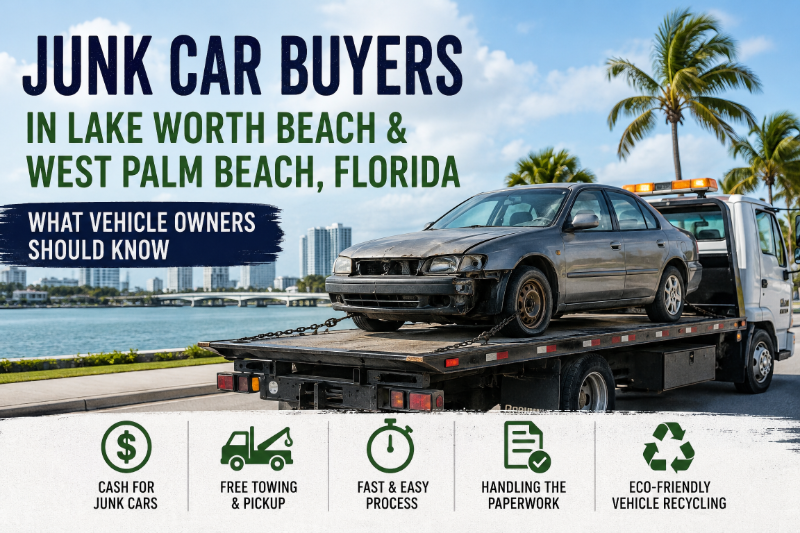
Few vehicle owners expect a repair estimate to exceed the value of their car. Yet that situation occurs every day throughout Palm Beach County. A transmission fails, an engine overheats, floodwater damages electronics, or an accident leaves a vehicle with costly body damage. Suddenly, owners are faced with a difficult decision: invest more money into repairs or sell the vehicle as a junk car.
For residents of Lake Worth Beach, West Palm Beach, and surrounding communities, understanding how to evaluate that decision can save thousands of dollars and prevent costly mistakes.
When a Vehicle Becomes a Financial Liability
A vehicle does not need to be completely inoperable before it becomes a candidate for the junk car market. In many cases, owners continue spending money on repairs long after a vehicle has stopped making financial sense.
Automotive experts often compare the cost of repairs against the vehicle’s current market value. If a repair will cost more than half of the vehicle’s actual value, it may be time to consider alternatives.
For example, a fifteen-year-old sedan worth $4,000 may require:
- A $3,500 transmission replacement
- A $2,800 engine rebuild
- A $1,500 air conditioning repair
- $1,200 worth of suspension work
Even if the vehicle can technically be repaired, the owner may never recover those costs.
South Florida’s Climate Takes a Toll on Vehicles
Florida’s weather creates unique challenges that can shorten vehicle life expectancy.
While northern states battle snow and road salt, South Florida drivers face constant exposure to heat, humidity, heavy rain, and occasional flooding. Coastal communities such as Lake Worth Beach and West Palm Beach also experience salt-air exposure that can accelerate corrosion.
Common Florida-related vehicle issues include:
- Flood-damaged electrical systems
- Corroded wiring
- Rust on undercarriage components
- Premature battery failures
- Air conditioning system breakdowns
- Paint and interior deterioration from UV exposure
As vehicles age, these issues often begin occurring simultaneously, creating repair costs that exceed the vehicle’s value.
The Hidden Costs of Keeping an Unwanted Vehicle
Many owners focus only on repair estimates without considering the ongoing costs of keeping a vehicle that is no longer reliable.
An older vehicle can generate expenses that include:
- Insurance premiums
- Registration fees
- Storage costs
- Towing expenses
- Repeated repair bills
- Lost productivity from breakdowns
When viewed over a period of several years, these costs can exceed the amount an owner might spend replacing the vehicle entirely.
What Makes a Junk Car Valuable?
One reason many owners are surprised by junk car offers is that they assume a non-running vehicle has no value.
In reality, automotive recyclers, dismantlers, salvage operators, and parts suppliers create demand for vehicles in almost every condition.
Valuable components may include:
- Engines
- Transmissions
- Catalytic converters
- Alternators
- Electronic modules
- Body panels
- Wheels and tires
- Radiators
- Aluminum components
Even when individual parts cannot be reused, the vehicle’s metal content still retains recycling value.
Accident Damage Versus Mechanical Failure
Not all junk vehicles arrive at the market for the same reasons.
Some vehicles are totaled by insurance companies following accidents. Others develop major mechanical issues after years of service. In South Florida, flooding also contributes significantly to vehicle losses.
Each type of damage affects value differently. A vehicle with collision damage but a healthy drivetrain may be worth more than a vehicle with a failed engine and transmission.
Because every vehicle is different, obtaining multiple evaluations is often beneficial.
The Importance of Vehicle Recycling
The junk car industry serves a much larger purpose than simply removing unwanted vehicles.
Modern recycling operations recover millions of tons of steel, aluminum, copper, and other materials each year. Automotive recycling reduces demand for newly mined resources while keeping usable materials in circulation.
Many replacement parts sold throughout Florida originate from recycled vehicles that would otherwise have been discarded.
This process creates both environmental and economic benefits.
Options Available to Palm Beach County Vehicle Owners
When a vehicle reaches the end of its useful life, owners generally have several options.
Trade-In
Dealerships may accept older vehicles, although trade-in values can be low when extensive repairs are needed.
Private Sale
Selling directly to another buyer may produce a higher sale price but often requires advertising, meetings, negotiations, and disclosure of known problems.
Donation
Some owners choose to donate vehicles to charitable organizations.
Junk Car Sale
Many owners prefer selling directly to a junk car buyer because the process is often faster and eliminates the need for repairs.
Junk Car Buyers in Lake Worth Beach and West Palm Beach
Palm Beach County supports an active network of junk car buyers, salvage companies, recyclers, and vehicle dismantlers. These businesses help connect unwanted vehicles with secondary markets where parts and materials can be reused.
Among the companies operating in this market is AD Buys Junk Cars, based in Lake Worth Beach. The company purchases a variety of vehicles, including cars, trucks, SUVs, vans, damaged vehicles, and non-running automobiles. Like many businesses in the automotive recycling industry, the company helps facilitate vehicle removal and transfers vehicles into recycling, salvage, and parts recovery channels.
For vehicle owners evaluating their options, comparing offers from multiple buyers can provide a better understanding of current market conditions.
How to Prepare Before Selling a Junk Car
Before selling a vehicle, owners should:
- Remove personal belongings
- Gather ownership documents
- Locate vehicle keys when possible
- Take photographs of the vehicle
- Request multiple quotes
- Verify buyer credentials
These simple steps can help ensure a smoother transaction.
Making the Right Financial Decision
Every vehicle owner’s situation is different. A relatively new vehicle with a single repair issue may justify additional investment. An older vehicle with multiple major problems may not.
The key is evaluating the total cost of ownership rather than focusing solely on one repair estimate.
For many residents of West Palm Beach, Lake Worth Beach, and surrounding Palm Beach County communities, selling an unwanted vehicle into the junk car market provides a practical solution that eliminates ongoing expenses while recovering value from a vehicle that has reached the end of its useful life.